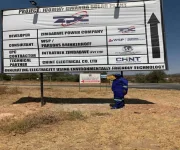
Munyati’s 100MW solar project had early site works underway by April 2026, months before Gwanda received its new Notice to Proceed in September. Both schemes carry the same headline capacity, yet they are now moving through very different stages of development.
Their shared history is easy to miss. Gwanda and Munyati were two parts of Zimbabwe’s original three-site solar program, alongside Insukamini, with each plant planned at 100MW. A decade later, comparing them by megawatts alone tells you almost nothing about which project is closer to delivering electricity.
The useful comparison is what has physically and financially happened. Munyati has moved into site establishment while strengthening the structure behind future electricity sales, whereas Gwanda has only just been formally released into a new 24-month delivery period after years of contractual conflict.
A second milestone followed on the commercial side of the project. ZETDC and Munyati Evergreen Energy signed an escrow and security agreement intended to ring-fence project revenue and support the utility’s future power-purchase obligations. It tackles a different problem from clearing land because large generation projects need a credible route from electricity sales to repayment, not only a technically buildable site.
The present Munyati arrangement is also no longer a simple replay of the project announced in 2015. The original 100MW tender went to Number 17 Metallurgical China, commonly identified as MCC17, and JA Solar later announced a module supply agreement connected to that contractor. The current project is being developed by Munyati Evergreen Energy as a public-private partnership with the Republic of Zimbabwe.
This change is more than a new company name. The developer now describes itself as responsible for development, construction, financing, and long-term operation. Readers therefore should not assume every supplier or commercial arrangement announced in 2015 still governs the plant being advanced in 2026.
The current restart comes from a restated EPC contract signed on March 27, 2025, followed by a Notice to Proceed in September 2026. ZPC directed Intratrek to mobilize without delay and set a 24-month project duration under the agreed program of works. Gwanda’s new 24-month construction order therefore marks authorization to begin, not evidence that Gwanda has already reached the same physical stage as Munyati.
Money remains part of the distinction. CHiNT Electric has submitted the advance-payment guarantee associated with Gwanda’s renewed implementation, while public reporting has also pointed to mobilization payment arrangements before full execution. Munyati’s latest financial milestone instead concerns ring-fenced future project revenue and the security of the electricity buyer’s obligations.
Gwanda also retains something Munyati does not: continuity in its headline contractor. Intratrek remains central after the court battles and contract restatement, even though the framework around its work has changed. Gwanda is effectively a restarted contractor relationship, while Munyati has moved through a different project vehicle.
Time also changes what an old project plan means. Construction delay risk across energy infrastructure matters because long delays can leave financing assumptions, procurement choices, contractors, and schedules out of step with the market that exists when construction finally starts. Munyati’s move from the 2015 contractor structure to its current PPP shows how much a project can change without changing its 100MW label.
Gwanda presents almost the reverse pattern. Its contractor name survived, but the contract had to be restated after years of litigation and stalled execution. The next meaningful evidence will therefore be physical mobilization, engineering progress, equipment procurement, and measurable construction against the new schedule.
Munyati still has its own distance to travel. Early site works and a stronger revenue-security structure do not equal commissioning, and neither milestone proves that the plant will enter service on a particular date. For now, Munyati is ahead in visible site activity, while Gwanda has only recently entered its new delivery period.
Their shared history is easy to miss. Gwanda and Munyati were two parts of Zimbabwe’s original three-site solar program, alongside Insukamini, with each plant planned at 100MW. A decade later, comparing them by megawatts alone tells you almost nothing about which project is closer to delivering electricity.
The useful comparison is what has physically and financially happened. Munyati has moved into site establishment while strengthening the structure behind future electricity sales, whereas Gwanda has only just been formally released into a new 24-month delivery period after years of contractual conflict.
Munyati reached site works first
Munyati Evergreen Energy said construction facilities, preliminary ground preparation, and technical-team mobilization had started at the Munyati Power Station site by April 2026. Those are early works rather than proof of a finished solar plant, but they put people and preparation on the ground before the main panel-installation phase.A second milestone followed on the commercial side of the project. ZETDC and Munyati Evergreen Energy signed an escrow and security agreement intended to ring-fence project revenue and support the utility’s future power-purchase obligations. It tackles a different problem from clearing land because large generation projects need a credible route from electricity sales to repayment, not only a technically buildable site.
The present Munyati arrangement is also no longer a simple replay of the project announced in 2015. The original 100MW tender went to Number 17 Metallurgical China, commonly identified as MCC17, and JA Solar later announced a module supply agreement connected to that contractor. The current project is being developed by Munyati Evergreen Energy as a public-private partnership with the Republic of Zimbabwe.
This change is more than a new company name. The developer now describes itself as responsible for development, construction, financing, and long-term operation. Readers therefore should not assume every supplier or commercial arrangement announced in 2015 still governs the plant being advanced in 2026.
Gwanda restarted through a contract reset
Gwanda followed a rougher institutional path. Intratrek Zimbabwe won the original Gwanda tender in the same 2015 solar program, but the project became trapped in disputes over payments, guarantees, termination, and whether the contractor had been allowed to perform its obligations.The current restart comes from a restated EPC contract signed on March 27, 2025, followed by a Notice to Proceed in September 2026. ZPC directed Intratrek to mobilize without delay and set a 24-month project duration under the agreed program of works. Gwanda’s new 24-month construction order therefore marks authorization to begin, not evidence that Gwanda has already reached the same physical stage as Munyati.
Money remains part of the distinction. CHiNT Electric has submitted the advance-payment guarantee associated with Gwanda’s renewed implementation, while public reporting has also pointed to mobilization payment arrangements before full execution. Munyati’s latest financial milestone instead concerns ring-fenced future project revenue and the security of the electricity buyer’s obligations.
Gwanda also retains something Munyati does not: continuity in its headline contractor. Intratrek remains central after the court battles and contract restatement, even though the framework around its work has changed. Gwanda is effectively a restarted contractor relationship, while Munyati has moved through a different project vehicle.
The two projects now carry different risks
Project labels can blur these differences. “Under development,” “early works,” and “notice to proceed” sound close in a headline, but they describe different positions in project delivery. Munyati has reported physical site establishment, while Gwanda has received authorization to begin a newly reset delivery program.Time also changes what an old project plan means. Construction delay risk across energy infrastructure matters because long delays can leave financing assumptions, procurement choices, contractors, and schedules out of step with the market that exists when construction finally starts. Munyati’s move from the 2015 contractor structure to its current PPP shows how much a project can change without changing its 100MW label.
Gwanda presents almost the reverse pattern. Its contractor name survived, but the contract had to be restated after years of litigation and stalled execution. The next meaningful evidence will therefore be physical mobilization, engineering progress, equipment procurement, and measurable construction against the new schedule.
Munyati still has its own distance to travel. Early site works and a stronger revenue-security structure do not equal commissioning, and neither milestone proves that the plant will enter service on a particular date. For now, Munyati is ahead in visible site activity, while Gwanda has only recently entered its new delivery period.