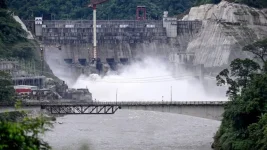
Indigenous tribes in northeastern India oppose a proposed hydroelectric dam that New Delhi considers essential for countering Chinese water control upstream in Tibet. The Adi people face displacement from their ancestral lands along the Siang River if authorities proceed with the 280-meter structure designed to store water equivalent to four million Olympic pools. Indian officials view the project as protection against the potential weaponization of the Yarlung Tsangpo by China's $167 billion Yaxia development across the border.
Local residents blocked government surveys and burned drilling equipment during protests against the dam that would submerge dozens of villages. China dismisses concerns about downstream impacts while India frames the reservoir as both flood protection and energy infrastructure capable of generating 11,600 megawatts. Authorities deployed paramilitary forces after villagers prevented contractors from accessing survey sites.
Residents say the river defines their cultural identity and sustains communities dependent on fertile valleys for agriculture. The government continues advancing plans despite warnings from experts about earthquake risks and recommendations for diplomatic water-sharing agreements instead of competing infrastructure projects.
Local residents blocked government surveys and burned drilling equipment during protests against the dam that would submerge dozens of villages. China dismisses concerns about downstream impacts while India frames the reservoir as both flood protection and energy infrastructure capable of generating 11,600 megawatts. Authorities deployed paramilitary forces after villagers prevented contractors from accessing survey sites.
Residents say the river defines their cultural identity and sustains communities dependent on fertile valleys for agriculture. The government continues advancing plans despite warnings from experts about earthquake risks and recommendations for diplomatic water-sharing agreements instead of competing infrastructure projects.