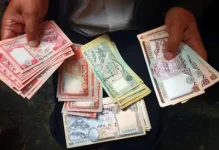
The Reserve Bank of India announced on Tuesday that authorized dealer banks may extend loans in rupees to residents of Nepal, Bhutan, and Sri Lanka to facilitate cross-border trade. Nepali experts suggest this policy shift could provide alternative financing options for businesses, though the RBI has not revealed specific lending terms. Nepal Rastra Bank officials confirmed the decision aligns with existing regulations that permit Nepali individuals and firms to borrow up to $1 million from foreign sources, or up to 100 million rupees from India.
Former Nepal Rastra Bank Executive Director Nara Bahadur Thapa said the move might help Nepali companies secure competitive interest rates and reduce their dependence on domestic banks. Economist Keshav Acharya noted that Indian banks possess greater capacity to finance large infrastructure projects, which Nepali banks cannot support without exceeding single-customer lending limits. Nepal aims to develop 28,500 megawatts of electricity within 10 years, requiring $46.5 billion in investment.
The rupee-denominated loans may deepen Nepal's economic dependence on India, as borrowers would need to purchase goods primarily from Indian markets. Nepal conducts over 60 percent of its foreign trade with India, exporting goods worth 224 billion rupees while importing 1,071 billion rupees in fiscal 2024-25. Acharya suggested the arrangement could reduce Nepal's need to convert U.S. dollars into rupees, saving transaction costs on currency exchanges.
Former Nepal Rastra Bank Executive Director Nara Bahadur Thapa said the move might help Nepali companies secure competitive interest rates and reduce their dependence on domestic banks. Economist Keshav Acharya noted that Indian banks possess greater capacity to finance large infrastructure projects, which Nepali banks cannot support without exceeding single-customer lending limits. Nepal aims to develop 28,500 megawatts of electricity within 10 years, requiring $46.5 billion in investment.
The rupee-denominated loans may deepen Nepal's economic dependence on India, as borrowers would need to purchase goods primarily from Indian markets. Nepal conducts over 60 percent of its foreign trade with India, exporting goods worth 224 billion rupees while importing 1,071 billion rupees in fiscal 2024-25. Acharya suggested the arrangement could reduce Nepal's need to convert U.S. dollars into rupees, saving transaction costs on currency exchanges.