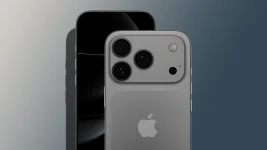
Apple’s iPhone 17 Pro keeps the 6.3-inch display size but moves to the A19 Pro and adds an integrated vapor chamber. The meaningful gains are sustained performance, battery life, telephoto flexibility, the front camera, and outdoor brightness, rather than a dramatic change in ordinary app speed.
Buying one now is different from comparing them at launch. Apple’s current U.S. store no longer lists either Pro model after the iPhone 18 Pro arrived, so the iPhone 17 Pro price depends on remaining carrier and retailer stock, while a refurbished iPhone 16 Pro can vary heavily by battery health, storage, warranty, and condition. The 17 Pro originally started at $1,099 with 256GB, which makes same-capacity comparisons more useful than comparing old base prices.
Memory is only part of the performance change. Apple says A19 Pro combined with its vapor-chamber cooling delivers up to 40 percent better sustained performance than the previous generation. Heavy gaming, long video exports, and local AI workloads can benefit more than messaging or browsing, and experiments with an actively cooled A18 Pro show why thermals can matter almost as much as a chip label during extended loads.
iPhone 17 Pro battery life also gets a practical boost. U.S. models are eSIM-only, letting Apple use the former physical-SIM space for more battery capacity, with Apple rating those models for up to 39 hours of video playback. Among the iPhone 17 Pro features that matter daily, the brighter 3000-nit outdoor display may be more noticeable than another benchmark win when you are using maps, shooting video, or reading outside.
The performance gap also depends on what you actually sustain. Short bursts in social apps and web browsing leave little time for the vapor chamber to matter, while a long game, repeated photo processing, or a ProRes export keeps the chip loaded long enough for cooling and memory headroom to become useful.
Video shooters get a less obvious upgrade. Both generations can record 4K at 120 fps, and 4K ProRes at 120 fps requires compatible external storage on both, so the 16 Pro remains capable. The 17 Pro adds ProRes RAW, Apple Log 2, and genlock, which matters more in controlled production workflows than casual clips.
Storage can make a cheap listing look better than it is. The 17 Pro starts at 256GB, while the 16 Pro was sold from 128GB through 1TB, so compare equal capacities before deciding the older phone is the obvious value.
Cosmetic choices changed more than the basic footprint. The iPhone 17 Pro colors are cosmic orange, deep blue, and silver, while the iPhone 16 Pro colors were black titanium, natural titanium, white titanium, and desert titanium. The iPhone 17 Pro camera and battery gains matter more in use than the aluminum shell, especially during longer sessions.
For an existing 16 Pro owner, the strongest reasons to move are sustained heavy performance, longer battery life, the newer telephoto and selfie cameras, or the extra video-production tools. If those are not pain points, the 16 Pro still has a 120Hz 6.3-inch display, A18 Pro, 4K120 video, USB 3 workflows, and a capable triple-camera system. For buyers choosing between used or leftover stock in 2026, storage, battery condition, warranty, and the actual price gap can matter more than the generation number.
Buying one now is different from comparing them at launch. Apple’s current U.S. store no longer lists either Pro model after the iPhone 18 Pro arrived, so the iPhone 17 Pro price depends on remaining carrier and retailer stock, while a refurbished iPhone 16 Pro can vary heavily by battery health, storage, warranty, and condition. The 17 Pro originally started at $1,099 with 256GB, which makes same-capacity comparisons more useful than comparing old base prices.
The real upgrade is sustained performance and battery
The iPhone 17 Pro specs pair A19 Pro with 12GB of RAM, while the iPhone 16 Pro specs center on A18 Pro and 8GB. Apple does not advertise iPhone RAM on its consumer spec sheets, but Xcode 26 confirmed the 12GB figure, while an iFixit teardown identified 8GB of LPDDR5 in the 16 Pro. The earlier 12GB RAM report for the iPhone 17 Pro therefore ended up matching the shipping hardware.Memory is only part of the performance change. Apple says A19 Pro combined with its vapor-chamber cooling delivers up to 40 percent better sustained performance than the previous generation. Heavy gaming, long video exports, and local AI workloads can benefit more than messaging or browsing, and experiments with an actively cooled A18 Pro show why thermals can matter almost as much as a chip label during extended loads.
iPhone 17 Pro battery life also gets a practical boost. U.S. models are eSIM-only, letting Apple use the former physical-SIM space for more battery capacity, with Apple rating those models for up to 39 hours of video playback. Among the iPhone 17 Pro features that matter daily, the brighter 3000-nit outdoor display may be more noticeable than another benchmark win when you are using maps, shooting video, or reading outside.
The performance gap also depends on what you actually sustain. Short bursts in social apps and web browsing leave little time for the vapor chamber to matter, while a long game, repeated photo processing, or a ProRes export keeps the chip loaded long enough for cooling and memory headroom to become useful.
The camera difference lives at the long end
The iPhone 17 Pro camera system keeps 48MP main and ultrawide cameras but replaces the 16 Pro’s 12MP 5x telephoto with a larger 48MP 4x telephoto. Apple also adds an 8x optical-quality crop and an 18MP Center Stage front camera. Direct side-by-side testing found the main, 2x, ultrawide, macro, and low-light results broadly similar, while the clearest hardware change appears once you reach the telephoto ranges.Video shooters get a less obvious upgrade. Both generations can record 4K at 120 fps, and 4K ProRes at 120 fps requires compatible external storage on both, so the 16 Pro remains capable. The 17 Pro adds ProRes RAW, Apple Log 2, and genlock, which matters more in controlled production workflows than casual clips.
Size stays familiar while the materials change
The iPhone 17 Pro screen size remains 6.3 inches, so the phone does not suddenly become a small Pro Max. The iPhone 17 Pro dimensions grow slightly, and the iPhone 17 Pro weight reaches 204 grams versus 199 grams for the 16 Pro. Apple also switched from the 16 Pro’s titanium construction to an aluminum unibody designed to spread heat into the vapor chamber.Storage can make a cheap listing look better than it is. The 17 Pro starts at 256GB, while the 16 Pro was sold from 128GB through 1TB, so compare equal capacities before deciding the older phone is the obvious value.
Cosmetic choices changed more than the basic footprint. The iPhone 17 Pro colors are cosmic orange, deep blue, and silver, while the iPhone 16 Pro colors were black titanium, natural titanium, white titanium, and desert titanium. The iPhone 17 Pro camera and battery gains matter more in use than the aluminum shell, especially during longer sessions.
For an existing 16 Pro owner, the strongest reasons to move are sustained heavy performance, longer battery life, the newer telephoto and selfie cameras, or the extra video-production tools. If those are not pain points, the 16 Pro still has a 120Hz 6.3-inch display, A18 Pro, 4K120 video, USB 3 workflows, and a capable triple-camera system. For buyers choosing between used or leftover stock in 2026, storage, battery condition, warranty, and the actual price gap can matter more than the generation number.