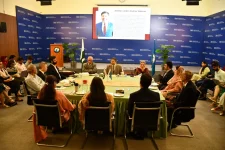
The Institute of Regional Studies organized a panel examining China-Pakistan-Bangladesh partnerships focused on regional development. Ambassadors and academics discussed how this trilateral cooperation could revitalize South Asian collaboration beyond traditional geopolitical constraints. Institute President Ambassador Jauhar Saleem noted that South Asia maintains the world's lowest intra-regional trade at five percent. He emphasized that this new framework would complement rather than replace existing regional organizations like SAARC.
Former Ambassador Moin ul Haque highlighted successful pandemic-era initiatives such as emergency supply reserves and poverty reduction programs. Bangladeshi expert Lt. Gen. Dr. Aminul Karim stressed the partnership's civilian focus on climate change and technology development. Dr. Salma Malik criticized hegemonic regional approaches and praised China's open cooperation model. Professor Lin Minwang clarified that China seeks mutual benefit rather than regional dominance. Participants agreed that Belt and Road Initiative frameworks offer practical alternatives to geopolitical rivalries while promoting shared prosperity across South Asia.
Former Ambassador Moin ul Haque highlighted successful pandemic-era initiatives such as emergency supply reserves and poverty reduction programs. Bangladeshi expert Lt. Gen. Dr. Aminul Karim stressed the partnership's civilian focus on climate change and technology development. Dr. Salma Malik criticized hegemonic regional approaches and praised China's open cooperation model. Professor Lin Minwang clarified that China seeks mutual benefit rather than regional dominance. Participants agreed that Belt and Road Initiative frameworks offer practical alternatives to geopolitical rivalries while promoting shared prosperity across South Asia.