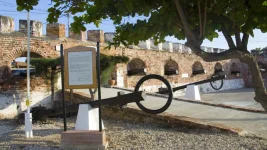
The World Heritage Committee approved Jamaica's Port Royal for inscription on the UNESCO World Heritage List as an archaeological ensemble from the 17th century. This designation makes Port Royal the nation's second World Heritage Site alongside the Blue and John Crow Mountains. Culture Minister Olivia Grange expressed national pride through a video statement released Saturday following the announcement. The minister acknowledged support from the World Heritage Centre, ICOMOS, and several governments spanning Mexico, Canada, the Netherlands, and Japan. She also recognized Port Royal residents whose economic activities connect directly to the historic site's preservation and development.
UNESCO evaluators applied criteria 4 and 6 when assessing the location for world heritage status. The fourth criterion identifies sites demonstrating exceptional architectural or technological achievements that represent important periods in human development. The sixth criterion applies to locations with direct connections to events, beliefs, or artistic expressions possessing outstanding universal significance. Evaluators praised the site's integrity while noting the remarkable preservation of both land-based and submerged components.
The assessment team highlighted the survival of the original 17th-century urban layout and six defensive fortifications that encircled the settlement before the catastrophic 1692 earthquake struck. UNESCO officials described the underwater archaeological remains as extraordinarily well-maintained beneath protective sediment layers. This recognition establishes a significant achievement for Jamaica by confirming Port Royal's position as a location with global cultural and historical importance.
UNESCO evaluators applied criteria 4 and 6 when assessing the location for world heritage status. The fourth criterion identifies sites demonstrating exceptional architectural or technological achievements that represent important periods in human development. The sixth criterion applies to locations with direct connections to events, beliefs, or artistic expressions possessing outstanding universal significance. Evaluators praised the site's integrity while noting the remarkable preservation of both land-based and submerged components.
The assessment team highlighted the survival of the original 17th-century urban layout and six defensive fortifications that encircled the settlement before the catastrophic 1692 earthquake struck. UNESCO officials described the underwater archaeological remains as extraordinarily well-maintained beneath protective sediment layers. This recognition establishes a significant achievement for Jamaica by confirming Port Royal's position as a location with global cultural and historical importance.