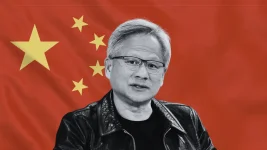
China's Cyberspace Administration ordered domestic companies like Tencent and ByteDance to halt testing of NVIDIA's RTX 6000D graphics processors. The directive prevents NVIDIA from completing millions of chip sales based on existing project demands. This represents Beijing's most aggressive action against the American semiconductor company compared to previous restrictions on H20 AI chip shipments. Chinese regulators cited security concerns as justification for the expanded ban.
NVIDIA CEO Jensen Huang responded to the situation during a UK state visit with disappointment but acknowledged larger diplomatic tensions between the United States and China. The company remains patient while geopolitical issues are resolved between the two nations. China's shift toward domestic AI solutions reflects confidence that homegrown chips from Huawei and Cambricon can compete with restricted NVIDIA products.
Despite performance improvements, China faces significant production challenges in manufacturing AI semiconductors and high-bandwidth memory components at scale. The nation's transition to independent technology requires overcoming substantial supply chain limitations beyond simply matching NVIDIA's chip performance levels.
NVIDIA CEO Jensen Huang responded to the situation during a UK state visit with disappointment but acknowledged larger diplomatic tensions between the United States and China. The company remains patient while geopolitical issues are resolved between the two nations. China's shift toward domestic AI solutions reflects confidence that homegrown chips from Huawei and Cambricon can compete with restricted NVIDIA products.
Despite performance improvements, China faces significant production challenges in manufacturing AI semiconductors and high-bandwidth memory components at scale. The nation's transition to independent technology requires overcoming substantial supply chain limitations beyond simply matching NVIDIA's chip performance levels.