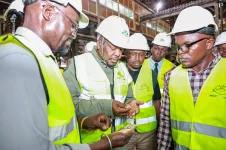
Kenya just ended a 24-year trade shield for its sugar industry. The country formally exited the COMESA Sugar Safeguard regime after the protection lapsed, signaling a major shift for its long-troubled sugar sector. Government officials and the Kenya Sugar Board stated the move reflects confidence in the industry's restructuring, arguing it is now better managed and ready to compete within the regional Common Market for Eastern and Southern Africa.
The safeguard, extended eight times since 2001, was designed to give the sector time to reform. Authorities claim benchmarks were met, including tariff-rate quotas and investments in productivity. The focus now moves to competitiveness and value addition, with millers encouraged to adopt integrated models producing ethanol, electricity from bagasse, and other byproducts alongside sugar.
Domestic production has risen significantly, with output jumping from around 472,773 metric tonnes in 2022 to over 815,454 metric tonnes recently, though annual demand remains near 1.1 million metric tonnes. The supply gap will still be filled by controlled imports from COMESA and other sources to ensure price stability. The government links recent production gains to increased sugarcane acreage, favorable weather, and fertilizer subsidies.
A key reform involves leasing former state-owned mills to private operators to boost efficiency. Officials insist exiting the safeguard does not mean withdrawing support, with regulatory oversight and farmer protections continuing under the Kenya Sugar Board. The sector's vulnerability to climate conditions remains a factor in ongoing planning, but the medium-term outlook is deemed positive due to expected gains in farm productivity and milling capacity.
The safeguard, extended eight times since 2001, was designed to give the sector time to reform. Authorities claim benchmarks were met, including tariff-rate quotas and investments in productivity. The focus now moves to competitiveness and value addition, with millers encouraged to adopt integrated models producing ethanol, electricity from bagasse, and other byproducts alongside sugar.
Domestic production has risen significantly, with output jumping from around 472,773 metric tonnes in 2022 to over 815,454 metric tonnes recently, though annual demand remains near 1.1 million metric tonnes. The supply gap will still be filled by controlled imports from COMESA and other sources to ensure price stability. The government links recent production gains to increased sugarcane acreage, favorable weather, and fertilizer subsidies.
A key reform involves leasing former state-owned mills to private operators to boost efficiency. Officials insist exiting the safeguard does not mean withdrawing support, with regulatory oversight and farmer protections continuing under the Kenya Sugar Board. The sector's vulnerability to climate conditions remains a factor in ongoing planning, but the medium-term outlook is deemed positive due to expected gains in farm productivity and milling capacity.