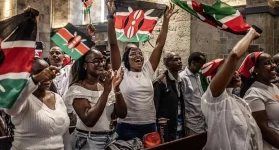
Kenyans march through streets one year after deadly protests against government corruption and tax increases. Police killed at least 60 people during demonstrations that peaked on June 25, 2024. Dozens more faced illegal detention after security forces responded with violence. Youth protesters return to demand justice for victims of police brutality. Recent death of teacher Albert Ojwang sparked renewed demonstrations across the country.
Douglas Kivoi studies police behavior at the Kenya Institute for Public Policy Research and Analysis. He says officers settle political scores and silence critics who challenge government power. Many cases of police violence never reach public attention because families stay quiet or face threats. Kenya has a progressive constitution but police refuse to change their practices. Officers continue operating like they did before democratic reforms.
Counter-protesters also march through cities supporting police actions. President William Ruto promises to stop kidnappings but defends law enforcement officers. He warns citizens against threatening or insulting police during protests. Kivoi points out that shooting civilians at close range cannot be justified under any circumstances. Such actions show deep problems within police agencies.
Police violence has plagued Kenya since independence in 1963. Every president from Jomo Kenyatta to current leaders has used officers to silence opposition voices. The 2010 constitution created oversight groups to separate police from presidential control. Training programs need major changes to fix officer attitudes toward communities. Six suspects face murder charges for killing Ojwang.
Douglas Kivoi studies police behavior at the Kenya Institute for Public Policy Research and Analysis. He says officers settle political scores and silence critics who challenge government power. Many cases of police violence never reach public attention because families stay quiet or face threats. Kenya has a progressive constitution but police refuse to change their practices. Officers continue operating like they did before democratic reforms.
Counter-protesters also march through cities supporting police actions. President William Ruto promises to stop kidnappings but defends law enforcement officers. He warns citizens against threatening or insulting police during protests. Kivoi points out that shooting civilians at close range cannot be justified under any circumstances. Such actions show deep problems within police agencies.
Police violence has plagued Kenya since independence in 1963. Every president from Jomo Kenyatta to current leaders has used officers to silence opposition voices. The 2010 constitution created oversight groups to separate police from presidential control. Training programs need major changes to fix officer attitudes toward communities. Six suspects face murder charges for killing Ojwang.