NVIDIA established market leadership in artificial intelligence semiconductors beginning in 2022, while Advanced Micro Devices accelerates competitive efforts under Chief Executive Lisa Su. AMD failed to anticipate the magnitude of AI demand when ChatGPT emerged, allowing NVIDIA to capture significant market share with Ampere and Hopper processors. The graphics processor manufacturer created an ecosystem through CUDA software that locked customers into proprietary solutions. Big Tech companies signed contracts with NVIDIA, making alternative suppliers to adopt despite competitive offerings. AMD entered the market as NVIDIA reached a trillion-dollar valuation.
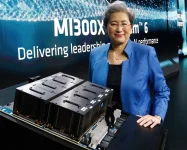
AMD introduced Instinct MI300X accelerators that match NVIDIA H100 performance while offering superior memory capacity and bandwidth. The company prices products 20 to 30 percent below NVIDIA equivalents, attracting customers like Microsoft and OpenAI through cost advantages. AMD plans next-generation MI400 processors featuring HBM4 technology and 50 percent greater memory than current solutions. The semiconductor firm develops Helios server racks with EPYC Venice processors to compete against NVIDIA enterprise systems. Quarterly earnings reports will demonstrate whether AMD gains meaningful market share against its established rival.
AMD introduced Instinct MI300X accelerators that match NVIDIA H100 performance while offering superior memory capacity and bandwidth. The company prices products 20 to 30 percent below NVIDIA equivalents, attracting customers like Microsoft and OpenAI through cost advantages. AMD plans next-generation MI400 processors featuring HBM4 technology and 50 percent greater memory than current solutions. The semiconductor firm develops Helios server racks with EPYC Venice processors to compete against NVIDIA enterprise systems. Quarterly earnings reports will demonstrate whether AMD gains meaningful market share against its established rival.