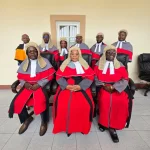
A law professor just publicly clashed with the chief justice over court delays. Lovemore Madhuku rejected Luke Malaba's claim that staff shortages cripple the justice system. He argued that deep procedural inefficiencies, not a lack of judges, cause the slowdowns. Madhuku acknowledged progress in delivering judgments electronically but called the staffing narrative misplaced for a population of their size.
He pointed to persistent technical problems with the electronic case management system. Network issues and frequent virtual hearing disconnections frustrate litigants and lawyers, often pushing them toward physical courtrooms. Madhuku stressed the enduring importance of public physical hearings for maintaining confidence in judicial proceedings.
His sharpest criticism targeted wasteful courtroom procedures. He cited examples like lawyers speaking for hours in High Court cases where minutes would suffice. Madhuku contrasted this with the Supreme Court's strict time limits, which enforce efficiency. He insisted that adding judges or technology would fail without fundamental procedural reform.
Chief Justice Malaba presented a starkly different assessment, describing an untenable situation. He stated the entire system relies on a small number of judges and magistrates, given the rising litigation. Malaba warned that their constitutional mandate is threatened without dramatically increased staffing, a concern echoed by his deputy. Madhuku maintained that the debate misses the point without fixing how cases are handled.
He pointed to persistent technical problems with the electronic case management system. Network issues and frequent virtual hearing disconnections frustrate litigants and lawyers, often pushing them toward physical courtrooms. Madhuku stressed the enduring importance of public physical hearings for maintaining confidence in judicial proceedings.
His sharpest criticism targeted wasteful courtroom procedures. He cited examples like lawyers speaking for hours in High Court cases where minutes would suffice. Madhuku contrasted this with the Supreme Court's strict time limits, which enforce efficiency. He insisted that adding judges or technology would fail without fundamental procedural reform.
Chief Justice Malaba presented a starkly different assessment, describing an untenable situation. He stated the entire system relies on a small number of judges and magistrates, given the rising litigation. Malaba warned that their constitutional mandate is threatened without dramatically increased staffing, a concern echoed by his deputy. Madhuku maintained that the debate misses the point without fixing how cases are handled.