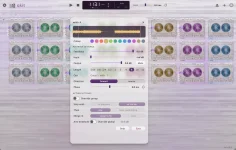
MB Big Biznis has released qkit, a live-loop tool that can grab audio from a take after it happens. Available for macOS and Windows, the plugin keeps track of the sound coming in, even when no loop has been set. Musicians can pull up to 192 seconds of past audio or start a fresh take on cue.
Each loop gets a tape slot that stays in sync with the DAW. Tempo shifts are no big deal, as qkit can stretch the audio and keep its pitch, or use varispeed for a more classic tape effect. Ableton Link works both ways, and playback can carry on even when the DAW stops.
There's a fair bit to mess with here. One instance can run 32 loops from a shared audio feed, with each tape able to play in reverse, take overdubs, or go silent. Users can tweak levels, add feedback, and set loop sizes from 1/16 of a bar up to 32 bars.
Editing gets quite flexible as well. Audio can move between tape slots, get copied, or merge with other takes. A loop can even grow using audio qkit had captured earlier. Groups get separate colors, controls, and routing, while eight stereo aux channels sit beside the main mix path.
For live use, MIDI mapping handles the controls, with custom value limits and a quick way to learn new assignments. OSC gets deep support as well. The plugin has a built-in address guide, can line up most commands with the beat, and ships with a full TouchOSC layout.
Performance gets some care, at least on paper. MB Big Biznis claims zero latency, while its audio code avoids file access, locks, and memory allocation during use. Buffer sizes span 128 to 8192 samples. Sessions also keep the recorded sound and tape settings intact for the next load.
New users get a guided walkthrough at launch. As for the cost, qkit goes for €69 before VAT, with VST3 and AU formats offered where supported.