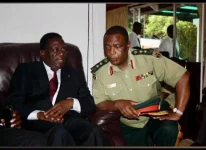
The political fallout between President Emmerson Mnangagwa and Vice President Constantino Chiwenga marks a significant shift in Zimbabwe’s power structure, exposing the instability of the country’s post-coup leadership. General Chiwenga played a central role in Mnangagwa’s ascent, utilizing his military influence to facilitate the removal of former President Robert Mugabe in 2017. Their alliance once appeared strong, but recent actions suggest Mnangagwa sees Chiwenga as a rival, not an ally.
Reports indicate that Mnangagwa has begun grooming Kudakwashe Tagwirei as a successor, sidelining Chiwenga from key decisions and empowering youth leaders to undermine his influence. These moves are viewed as efforts to neutralize Chiwenga’s political and military standing, shifting the internal balance within ZANU-PF. This situation risks causing instability both within the party and in Zimbabwe’s broader governance, as the military may resist the exclusion of one of its senior figures and the public grows frustrated with unmet promises.
The rift between Mnangagwa and Chiwenga highlights a broader problem of personal ambition overriding national interest. This environment can lead to policy gridlock, weakened institutions, and increased public distrust. The handling of this fallout serves as a warning about the dangers of transactional loyalty and the need for leadership that prioritizes accountability and public service over internal power struggles.
Reports indicate that Mnangagwa has begun grooming Kudakwashe Tagwirei as a successor, sidelining Chiwenga from key decisions and empowering youth leaders to undermine his influence. These moves are viewed as efforts to neutralize Chiwenga’s political and military standing, shifting the internal balance within ZANU-PF. This situation risks causing instability both within the party and in Zimbabwe’s broader governance, as the military may resist the exclusion of one of its senior figures and the public grows frustrated with unmet promises.
The rift between Mnangagwa and Chiwenga highlights a broader problem of personal ambition overriding national interest. This environment can lead to policy gridlock, weakened institutions, and increased public distrust. The handling of this fallout serves as a warning about the dangers of transactional loyalty and the need for leadership that prioritizes accountability and public service over internal power struggles.