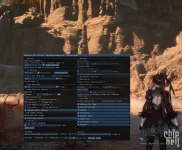
Enthusiasts successfully activated AMD's FSR 4 technology on legacy Radeon RX 6800 XT graphics cards after recent source code leaks. Modified dynamic link library files enabled the upscaling feature on RDNA 2 architecture through INT8 processing instead of native FP8 support. Community members utilized OptiScaler software to implement FSR 4.0.2 within Stellar Blade gaming sessions. Testing revealed enhanced visual fidelity compared to FSR 3 implementation. Frame rates dropped from 110 to approximately 100-107 during quality mode operation.
Performance penalties vary across different GPU generations when running unofficial FSR 4 configurations. RDNA 4 cards experience minimal 2-4 percent decreases, while RDNA 3 models show 7-10 percent reductions. RDNA 2 hardware suffers the largest impact with 10-20 percent frame rate losses due to missing WMMA instruction sets. These older cards compensate by routing matrix calculations through DP4a and integer processing units. AMD may eventually provide official FSR 4 support for previous-generation graphics processors.
Performance penalties vary across different GPU generations when running unofficial FSR 4 configurations. RDNA 4 cards experience minimal 2-4 percent decreases, while RDNA 3 models show 7-10 percent reductions. RDNA 2 hardware suffers the largest impact with 10-20 percent frame rate losses due to missing WMMA instruction sets. These older cards compensate by routing matrix calculations through DP4a and integer processing units. AMD may eventually provide official FSR 4 support for previous-generation graphics processors.