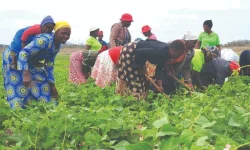
Zimbabwe expanded irrigation infrastructure in the drought-prone Mwenezi District through the Pikinini-Jawanda scheme, which transformed 400 households into commercial farmers. The project uses center-pivot systems and portable sprinklers fed by the Manyuchi Dam to irrigate crops year-round, rather than relying on rainfall. Deputy Minister Vangelis Haritatos said the country aims to reach 500,000 irrigated hectares by 2030, after reviving 220,000 hectares that yield 35 percent higher than rain-dependent agriculture.
Farmers sell certified sugar beans to seed companies under regional trade agreements that allow crops grown in Zimbabwe to reach markets across Zambia and Mozambique. The COMESA Seed Harmonisation Programme standardized certification across member states and increased cross-border seed commerce by 12 percent since 2020. Women comprise half the cooperative membership while young people manage equipment and sales operations. Regional bodies coordinate water sharing in the Limpopo Basin, which connects Zimbabwe with three neighboring nations.
Farmers sell certified sugar beans to seed companies under regional trade agreements that allow crops grown in Zimbabwe to reach markets across Zambia and Mozambique. The COMESA Seed Harmonisation Programme standardized certification across member states and increased cross-border seed commerce by 12 percent since 2020. Women comprise half the cooperative membership while young people manage equipment and sales operations. Regional bodies coordinate water sharing in the Limpopo Basin, which connects Zimbabwe with three neighboring nations.