NASA scientists caught a space rock from another star system cruising through our cosmic neighborhood. The Atlas telescope in Chile spotted the fast-moving visitor during the first days of July. This marks the third alien object astronomers have seen wandering into our solar system from deep space.
The icy chunk poses zero danger to Earth as it races toward the sun at a mind-blowing 37 miles per second. Scientists estimate the comet has been flying through the galaxy for hundreds of millions of years before arriving here. Paul Chodas from NASA's Near Earth Object Studies center says nobody knows which star originally launched this space traveler.
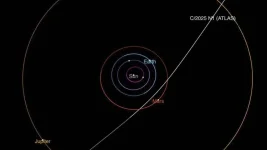
The comet currently sits about 416 million miles away from the sun near Jupiter's orbit. Astronomers gave it the official name 3I/Atlas and have made more than 100 observations since its discovery. Early reports show the visitor has developed a glowing tail and a cloud of gas around its center.
October will bring the comet's closest approach to our sun as it swoops between Mars and Earth. The space rock will stay a safe 150 million miles away from our planet during its flyby. Telescopes can track the comet through September before it gets lost in the sun's glare.
This newcomer appears much larger than the previous two interstellar visitors that dropped by our solar system. Scientists spotted Oumuamua back in 2017 and 21/Borisov arrived in 2019 from their home star systems.
The icy chunk poses zero danger to Earth as it races toward the sun at a mind-blowing 37 miles per second. Scientists estimate the comet has been flying through the galaxy for hundreds of millions of years before arriving here. Paul Chodas from NASA's Near Earth Object Studies center says nobody knows which star originally launched this space traveler.
The comet currently sits about 416 million miles away from the sun near Jupiter's orbit. Astronomers gave it the official name 3I/Atlas and have made more than 100 observations since its discovery. Early reports show the visitor has developed a glowing tail and a cloud of gas around its center.
October will bring the comet's closest approach to our sun as it swoops between Mars and Earth. The space rock will stay a safe 150 million miles away from our planet during its flyby. Telescopes can track the comet through September before it gets lost in the sun's glare.
This newcomer appears much larger than the previous two interstellar visitors that dropped by our solar system. Scientists spotted Oumuamua back in 2017 and 21/Borisov arrived in 2019 from their home star systems.