Head-related transfer functions become meaningfully distance-dependent when a sound source moves inside roughly one meter of the center of your head. Farther out, changing distance mostly changes level and room cues, while the head-related filtering stays comparatively stable.
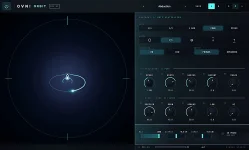
Move a source close to one ear, and the situation gets much less tidy. The nearer ear gains level while the far ear sits deeper in the head shadow, especially for a source coming in from the side. ORBIT's binaural movement engine accounts for this near-field behavior instead of treating every distance as the same HRTF with a volume knob attached.
The difference is easy to miss in a normal mix because loudness is such a strong distance cue. Turn level matching into part of the test, though, and those left-right changes start doing real work.
Bring the source inside a meter and the geometry changes. Each ear now sits at a meaningfully different distance and angle from the source, so the head no longer behaves like a small obstacle viewed from far away. The source position relative to each ear starts shifting enough to alter level and spectral balance separately.
Interaural time difference does not explode as the source approaches. Measurements generally show much stronger distance changes in interaural level difference than in arrival-time difference. Very close lateral sources can produce surprisingly large low-frequency level differences, even in ranges where far-field head shadow would normally be modest.
One classic set of near-field measurements found low-frequency interaural level differences reaching around 20 dB for a source only 12 centimeters away. Nobody needs to mix with a virtual speaker parked 12 centimeters from their skull, but the number shows why simple gain automation is not the same thing as proximity rendering.
Acoustic parallax adds another wrinkle. Moving a nearby source changes its effective angle to each ear more than the same movement would at several meters, so spectral features can shift with distance as well as direction. Your binaural renderer therefore has more to solve than left-right balance.
Side placement is where these cues earn their keep. Experiments on nearby sound localization repeatedly find better distance judgments for lateral sources than for sources sitting straight ahead or behind. The reason is practical rather than mystical. Two ears receive a stronger distance-dependent contrast when the source is off to one side.
A near-field distance rendering study found that a compact distance-dependent filter could improve the rendering of nearby lateral sources beyond simple intensity adjustment. Related work has shown the benefit is strongest at very close distances, where the binaural level pattern changes fastest.
A cleaner test keeps overall level under control while moving the source from around a meter to a few tens of centimeters at a lateral angle. Listen to how the image presses toward the nearer ear, how the opposite ear darkens, and whether the source feels physically closer rather than merely louder. Short broadband sounds make the contrast easier to catch.
ORBIT describes its under-one-meter processing as Duda-Martens proximity, with bass bloom and asymmetric ear shadow. Those choices line up with the underlying near-field problem. The useful part is not a generic bass boost. It is a distance-sensitive change tied to where the source sits relative to both ears.
Front-center movement is a tougher demo because the left and right ears remain comparatively symmetrical. Sliding the same source toward one side gives the renderer more binaural distance information to work with, so the proximity effect usually reads more clearly.
For actual sound design, this means distance and azimuth should be judged together. A whisper orbiting ten centimeters from the head should not behave like a distant source with louder automation, and a close side pass should not keep the same ear balance it had at two meters. Near-field rendering matters because the head itself becomes part of the distance cue.
Move a source close to one ear, and the situation gets much less tidy. The nearer ear gains level while the far ear sits deeper in the head shadow, especially for a source coming in from the side. ORBIT's binaural movement engine accounts for this near-field behavior instead of treating every distance as the same HRTF with a volume knob attached.
The difference is easy to miss in a normal mix because loudness is such a strong distance cue. Turn level matching into part of the test, though, and those left-right changes start doing real work.
Near-field rendering starts where ordinary HRTFs stop
Most HRTF sets are measured with the source a meter or more from the listener. At those distances, the wavefront reaching the head is close enough to planar that moving the source farther away does not radically rewrite the binaural filter.Bring the source inside a meter and the geometry changes. Each ear now sits at a meaningfully different distance and angle from the source, so the head no longer behaves like a small obstacle viewed from far away. The source position relative to each ear starts shifting enough to alter level and spectral balance separately.
Interaural time difference does not explode as the source approaches. Measurements generally show much stronger distance changes in interaural level difference than in arrival-time difference. Very close lateral sources can produce surprisingly large low-frequency level differences, even in ranges where far-field head shadow would normally be modest.
One classic set of near-field measurements found low-frequency interaural level differences reaching around 20 dB for a source only 12 centimeters away. Nobody needs to mix with a virtual speaker parked 12 centimeters from their skull, but the number shows why simple gain automation is not the same thing as proximity rendering.
The far ear changes the character of proximity
The obvious cue is the louder near ear. The less obvious one is what happens across the head, where shadowing becomes increasingly asymmetric as the source closes in. Low frequencies, high frequencies, and the detailed spectral shape do not all change by the same amount.Acoustic parallax adds another wrinkle. Moving a nearby source changes its effective angle to each ear more than the same movement would at several meters, so spectral features can shift with distance as well as direction. Your binaural renderer therefore has more to solve than left-right balance.
Side placement is where these cues earn their keep. Experiments on nearby sound localization repeatedly find better distance judgments for lateral sources than for sources sitting straight ahead or behind. The reason is practical rather than mystical. Two ears receive a stronger distance-dependent contrast when the source is off to one side.
A near-field distance rendering study found that a compact distance-dependent filter could improve the rendering of nearby lateral sources beyond simple intensity adjustment. Related work has shown the benefit is strongest at very close distances, where the binaural level pattern changes fastest.
Loudness can hide whether the binaural model works
Drop a sound by 12 dB and most listeners will hear it as farther away even if you leave every HRTF cue untouched. Loudness is powerful enough to mask subtler near-field behavior, which makes casual A/B testing pretty bad at revealing whether a renderer is actually modeling proximity.A cleaner test keeps overall level under control while moving the source from around a meter to a few tens of centimeters at a lateral angle. Listen to how the image presses toward the nearer ear, how the opposite ear darkens, and whether the source feels physically closer rather than merely louder. Short broadband sounds make the contrast easier to catch.
ORBIT describes its under-one-meter processing as Duda-Martens proximity, with bass bloom and asymmetric ear shadow. Those choices line up with the underlying near-field problem. The useful part is not a generic bass boost. It is a distance-sensitive change tied to where the source sits relative to both ears.
Front-center movement is a tougher demo because the left and right ears remain comparatively symmetrical. Sliding the same source toward one side gives the renderer more binaural distance information to work with, so the proximity effect usually reads more clearly.
For actual sound design, this means distance and azimuth should be judged together. A whisper orbiting ten centimeters from the head should not behave like a distant source with louder automation, and a close side pass should not keep the same ear balance it had at two meters. Near-field rendering matters because the head itself becomes part of the distance cue.