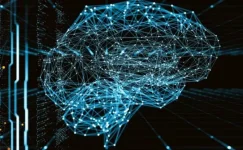
Scientists at the University of Surrey created a method that boosts artificial intelligence systems by replicating how human brains organize connections between neurons. The technique, detailed in the journal Neurocomputing, links each artificial neuron only to adjacent or related units rather than creating vast webs of connections across entire networks. This approach mirrors biological brain structure and drastically reduces energy consumption while maintaining accuracy in modern AI applications like ChatGPT and similar generative models.
Senior lecturer Dr. Roman Bauer said intelligent systems can now operate far more efficiently while slashing power requirements. He noted that training popular large AI models currently uses more than one million kilowatt hours of electricity, a level he described as unsustainable given the technology's rapid expansion. The research team eliminated countless unnecessary links between artificial neurons, which improved performance through a more resource-conscious design.
An advanced variant called Enhanced Topographical Sparse Mapping adds a biologically inspired refinement process during training that resembles how actual brains gradually optimize neural pathways during learning. Researchers are investigating potential uses in neuromorphic computing, which draws inspiration from brain architecture and function.
Senior lecturer Dr. Roman Bauer said intelligent systems can now operate far more efficiently while slashing power requirements. He noted that training popular large AI models currently uses more than one million kilowatt hours of electricity, a level he described as unsustainable given the technology's rapid expansion. The research team eliminated countless unnecessary links between artificial neurons, which improved performance through a more resource-conscious design.
An advanced variant called Enhanced Topographical Sparse Mapping adds a biologically inspired refinement process during training that resembles how actual brains gradually optimize neural pathways during learning. Researchers are investigating potential uses in neuromorphic computing, which draws inspiration from brain architecture and function.