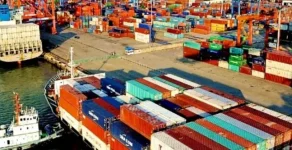
Nigeria's shipping sector had a mixed year with zero piracy but crushing costs. The country's maritime industry, under its new Ministry of Marine and Blue Economy, reported no pirate attacks on commercial ships in its waters and the wider Gulf of Guinea for 2025, alongside a ten to fifteen percent improvement in ship turnaround times at Lagos ports. However, operational expenses remain thirty to forty percent higher than regional rivals like Tema and Lome, with cargo dwell times stretching between ten and eighteen days due to inefficient clearance processes.
The Sea Empowerment and Research Centre, a maritime think tank, released these findings, noting progress in customs modernization with a new digital system and scanner deployments. Head of Research Eugene Nweke identified severe foreign exchange volatility as the most destabilizing factor, impacting over eighty percent of maritime transactions. While non-oil exports saw strong growth, high terminal charges and numerous unofficial fees hurt competitiveness, diverting cargo to neighboring ports.
The report rated policy direction as strong but labeled cost competitiveness as weak and macroeconomic stability as fragile. For 2026, the sector must urgently reduce arbitrary port charges, fully implement a national single window for digital clearance, and develop functional rail and waterway connections to consolidate gains. Without immediate action on costs and efficiency, the foundational reforms of 2025 risk being undermined.
The Sea Empowerment and Research Centre, a maritime think tank, released these findings, noting progress in customs modernization with a new digital system and scanner deployments. Head of Research Eugene Nweke identified severe foreign exchange volatility as the most destabilizing factor, impacting over eighty percent of maritime transactions. While non-oil exports saw strong growth, high terminal charges and numerous unofficial fees hurt competitiveness, diverting cargo to neighboring ports.
The report rated policy direction as strong but labeled cost competitiveness as weak and macroeconomic stability as fragile. For 2026, the sector must urgently reduce arbitrary port charges, fully implement a national single window for digital clearance, and develop functional rail and waterway connections to consolidate gains. Without immediate action on costs and efficiency, the foundational reforms of 2025 risk being undermined.