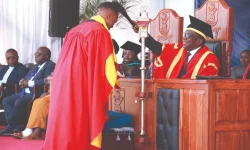
The National University of Science and Technology received advanced medical equipment from China to upgrade the Joshua Mqabuko Nkomo Ekusileni Medical Centre. Vice Chancellor Mqhele Dlodlo announced the progress on Saturday at the university's 31st graduation ceremony in Bulawayo, where President Mnangagwa conferred degrees to 2,504 students. The National Social Security Authority transferred the facility to NUST in February under a long-term lease agreement.
The university plans to transform the 200-bed hospital into a research and teaching center offering advanced medical services and promoting medical tourism. NUST participates in a $15 million climate change research project with Canadian Mennonite University and Bindura University of Science Education. The three-year initiative aims to enhance climate resilience in Gwanda, Mwenezi, and Binga through the implementation of nature-based solutions.
Dlodlo highlighted the Professor Phinias Mogorosi Makhurane Technovation Centre, which President Mnangagwa commissioned last year. The facility supports five startup projects in agriculture, energy, transportation, manufacturing, and rural industrialization. One project converts surplus tomatoes into powder to address post-harvest losses exceeding 50 percent. The university also developed four bio-fertilizers through collaboration with Lilongwe University of Agriculture and Natural Resources in Malawi.
The university plans to transform the 200-bed hospital into a research and teaching center offering advanced medical services and promoting medical tourism. NUST participates in a $15 million climate change research project with Canadian Mennonite University and Bindura University of Science Education. The three-year initiative aims to enhance climate resilience in Gwanda, Mwenezi, and Binga through the implementation of nature-based solutions.
Dlodlo highlighted the Professor Phinias Mogorosi Makhurane Technovation Centre, which President Mnangagwa commissioned last year. The facility supports five startup projects in agriculture, energy, transportation, manufacturing, and rural industrialization. One project converts surplus tomatoes into powder to address post-harvest losses exceeding 50 percent. The university also developed four bio-fertilizers through collaboration with Lilongwe University of Agriculture and Natural Resources in Malawi.