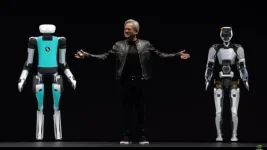
NVIDIA Chief Executive Jensen Huang advises university students to pursue physical sciences education for future career opportunities. The technology leader believes Physical AI represents the next trillion-dollar market opportunity beyond current generative artificial intelligence applications. Physical sciences encompass physics, chemistry, astronomy, and related fields that study non-living systems.
Huang suggests these academic disciplines will become essential as companies develop humanoid robots for workplace automation. Physical AI systems require understanding of real-time movement prediction and behavioral modeling to replace human workers effectively. Software engineering fields have experienced reduced demand as artificial intelligence automates traditional programming tasks.
NVIDIA develops products like Omniverse and Cosmos to enable robotic integration across various industries. The company shifts focus from text generation toward physical artificial intelligence applications. Academic institutions may witness increased enrollment in scientific programs as students follow Huang's recommendations for emerging technology careers.
Huang suggests these academic disciplines will become essential as companies develop humanoid robots for workplace automation. Physical AI systems require understanding of real-time movement prediction and behavioral modeling to replace human workers effectively. Software engineering fields have experienced reduced demand as artificial intelligence automates traditional programming tasks.
NVIDIA develops products like Omniverse and Cosmos to enable robotic integration across various industries. The company shifts focus from text generation toward physical artificial intelligence applications. Academic institutions may witness increased enrollment in scientific programs as students follow Huang's recommendations for emerging technology careers.