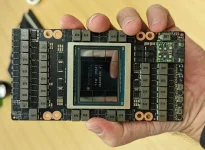
NVIDIA faces challenges meeting Chinese demand for H20 graphics processing units after the Trump administration eased export restrictions. The semiconductor company struggles with production constraints as manufacturing partner TSMC has redirected assembly lines toward more advanced processors. Chief Executive Jensen Huang acknowledged during his China visit that the company cannot match all customer orders with available inventory. The H20 represents a modified version designed specifically for Chinese markets but delivers reduced performance compared to NVIDIA's flagship products.
Production difficulties stem from contractual obligations that prioritize newer chip variants over the China-specific models. NVIDIA maintains stockpiles of completed H20 units and unfinished components but appears unlikely to resume dedicated manufacturing. The company had developed an upgraded H20 version before regulatory changes occurred. Memory supplier SK Hynix has indicated potential supply limitations for advanced components needed in future Chinese-market processors. Investors await earnings results to assess potential revenue impacts from resumed Chinese sales.
Production difficulties stem from contractual obligations that prioritize newer chip variants over the China-specific models. NVIDIA maintains stockpiles of completed H20 units and unfinished components but appears unlikely to resume dedicated manufacturing. The company had developed an upgraded H20 version before regulatory changes occurred. Memory supplier SK Hynix has indicated potential supply limitations for advanced components needed in future Chinese-market processors. Investors await earnings results to assess potential revenue impacts from resumed Chinese sales.