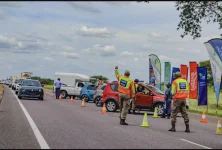
The local highways are basically death traps without some serious backup right about now. Nonkoliseko Joka, representing transport officials within the Northern Cape province, announced a fresh safety partnership across provinces with the Free State to stop the absolute carnage on major routes like the R57 and N12. This specific initiative aims to fix the massive spike in frontal vehicle crashes during trips between Kimberley and Bloemfontein through pooling resources for joint patrols and sharing data on accident hotspots. The situation became unbearable after multiple fatal wrecks claimed lives near Hopetown and other transit corridors, forcing officials to get their act together for the sake of road users.
Authorities feel massive pressure because the death toll has climbed past seven hundred people across the country during this holiday rush. One nightmare scenario on the R57 resulted in six people losing their lives, while a separate tragedy on the N12 near Hopetown killed seven individuals inside an SUV and a bakkie. These specific disasters involve high-speed impacts that frequently happen through exhausted drivers, intoxicated individuals, or people just being reckless behind the wheel. Half of the people dying in these incidents are actually pedestrians, who get caught in the middle of these metal-crunching disasters.
The joint effort utilizes shared traffic pattern information to prevent crashes before they actually happen. Teams plan to set up way more inspection stations and install safety features like vibrating pavement markers to jar sleepy drivers back into focus. Officials realize that linking up with neighbors creates a much bigger impact than trying to handle these busy cross-border routes alone. This strategy helps catch fast drivers and intoxicated operators before they can cause a total catastrophe for families traveling between provinces.
Local residents from the Midlands to the plains of the Northern Cape are exhausted from the constant stream of tragedies hitting their small towns. Personal stories of loss highlight how a single mistake on a dark road can destroy an entire family structure in seconds. Many people are pushing for better public transportation options to reduce the number of private cars clogging up these dangerous highways. The current focus remains on high-visibility enforcement and breath tests to keep the situation from spiraling further out of control.
Experts suggest that travelers need to take breaks every two hours and double-check their vehicle tires before starting long trips. Rain-prone areas like the KZN Midlands require extra caution to avoid sliding off the pavement during sudden storms. Leadership believes that this teamwork across borders offers a legitimate chance at making the upcoming year significantly safer for everyone.
Authorities feel massive pressure because the death toll has climbed past seven hundred people across the country during this holiday rush. One nightmare scenario on the R57 resulted in six people losing their lives, while a separate tragedy on the N12 near Hopetown killed seven individuals inside an SUV and a bakkie. These specific disasters involve high-speed impacts that frequently happen through exhausted drivers, intoxicated individuals, or people just being reckless behind the wheel. Half of the people dying in these incidents are actually pedestrians, who get caught in the middle of these metal-crunching disasters.
The joint effort utilizes shared traffic pattern information to prevent crashes before they actually happen. Teams plan to set up way more inspection stations and install safety features like vibrating pavement markers to jar sleepy drivers back into focus. Officials realize that linking up with neighbors creates a much bigger impact than trying to handle these busy cross-border routes alone. This strategy helps catch fast drivers and intoxicated operators before they can cause a total catastrophe for families traveling between provinces.
Local residents from the Midlands to the plains of the Northern Cape are exhausted from the constant stream of tragedies hitting their small towns. Personal stories of loss highlight how a single mistake on a dark road can destroy an entire family structure in seconds. Many people are pushing for better public transportation options to reduce the number of private cars clogging up these dangerous highways. The current focus remains on high-visibility enforcement and breath tests to keep the situation from spiraling further out of control.
Experts suggest that travelers need to take breaks every two hours and double-check their vehicle tires before starting long trips. Rain-prone areas like the KZN Midlands require extra caution to avoid sliding off the pavement during sudden storms. Leadership believes that this teamwork across borders offers a legitimate chance at making the upcoming year significantly safer for everyone.