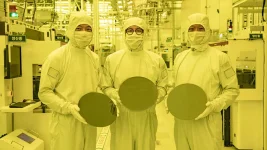
Samsung reduced its 2-nanometer wafer prices to $20,000 per unit to compete with TSMC, which plans to charge $30,000 when mass production begins in the fourth quarter of 2025. The South Korean manufacturer signed a $16.5 billion contract with Tesla for AI chip production and seeks additional clients to operate its underutilized fabrication plants in South Korea and the United States. Industry observers suggest the pricing strategy could attract companies considering TSMC for advanced semiconductor manufacturing, but customers may prioritize yield reliability over cost savings.
TSMC maintains its position as the leading foundry with commitments from NVIDIA and AMD for 2-nanometer chips. The Taiwanese company bases its premium pricing on consistent manufacturing performance and established customer relationships. Samsung's discount reflects a 33 percent price reduction compared with its competitor, yet the effectiveness of this approach depends on whether production quality matches TSMC's standards. The rivalry between the two manufacturers will influence the semiconductor market beyond 2025 as demand grows for AI processors and graphics chips.
TSMC maintains its position as the leading foundry with commitments from NVIDIA and AMD for 2-nanometer chips. The Taiwanese company bases its premium pricing on consistent manufacturing performance and established customer relationships. Samsung's discount reflects a 33 percent price reduction compared with its competitor, yet the effectiveness of this approach depends on whether production quality matches TSMC's standards. The rivalry between the two manufacturers will influence the semiconductor market beyond 2025 as demand grows for AI processors and graphics chips.