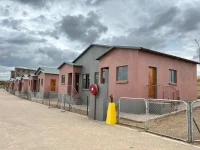
Namibia's housing shortage stems primarily from income inequality, with low earners comprising 87.5 percent of those requiring shelter, according to Urban and Rural Development Minister James Sankwasa. Speaking through special adviser Boniface Mutumba during a Mass Housing Development Programme handover ceremony in Windhoek, the minister explained that households earning approximately 10,000 Namibian dollars monthly struggle to secure formal accommodation due to elevated construction expenses, restricted financing access, and stringent collateral demands from lenders.
Beyond addressing informal settlement dwellers and backyard renters, Sankwasa emphasized that middle-income households represent an expanding segment lacking affordable options. He encouraged private developers and financial institutions to create innovative pricing structures and lending mechanisms. The government intends to service 10,000 plots and build 10,000 affordable units annually through 2030 under the sixth National Development Plan, potentially delivering 50,000 homes and serviced lots over five years to reduce the substantial backlog affecting hundreds of thousands of residents.
Beyond addressing informal settlement dwellers and backyard renters, Sankwasa emphasized that middle-income households represent an expanding segment lacking affordable options. He encouraged private developers and financial institutions to create innovative pricing structures and lending mechanisms. The government intends to service 10,000 plots and build 10,000 affordable units annually through 2030 under the sixth National Development Plan, potentially delivering 50,000 homes and serviced lots over five years to reduce the substantial backlog affecting hundreds of thousands of residents.