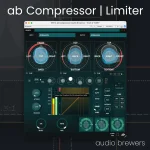
Full-sphere seventh-order Ambisonics contains 64 audio channels because a three-dimensional order N signal uses exactly (N + 1) squared components. First order needs four, third order needs 16, and sixth order needs 49.
Those channels are not speaker feeds. Each one carries a spherical-harmonic component of the encoded soundfield, and a decoder later combines those components for headphones, a surround array, or another playback target. Treating the number 64 as a speaker count sends the whole routing plan sideways.
Higher order buys more spatial detail by adding more components, but the growth is quadratic rather than linear. Seventh order is therefore not seven times first order in channel terms. It is sixteen times wider.
The jump from sixth to seventh order is especially useful to understand. Every new full-sphere order N adds 2N + 1 components, so seventh order adds 15 new components on top of the 49 already present at sixth order. In standard ACN ordering, those seventh-order components occupy the final 15 positions of a complete 64-channel stream.
Horizontal-only Ambisonics is a different case and needs fewer components because it does not represent elevation. Its channel count is 2N + 1, which means seventh-order horizontal Ambisonics uses 15 channels rather than 64. Saying seventh order always means 64 channels is therefore too broad. The 64-channel figure applies to complete three-dimensional, or periphonic, Ambisonics.
A processor designed for seventh-order Ambisonics across a 64-channel path therefore sits inside a much wider signal path than a normal stereo insert. The host, bus, plugin format, neighboring processors, decoder, and export route all need to agree on enough channels for the order you intend to preserve.
Software support can become the real ceiling even though the Ambisonics math continues beyond seventh order. Eighth order needs 81 channels, ninth needs 100, and tenth needs 121. The Ambisonics mapping defined for Ogg Opus even specifies valid full-sphere counts through fourteenth order at 225 channels, so 64 is not a universal limit of the format itself.
DAWs can impose their own practical boundaries. Avid added fourth- through seventh-order Ambisonics track widths to Pro Tools Ultimate in version 2023.6, with seventh order occupying 64 channels. A plugin may understand seventh-order audio perfectly and still be useless for a full 64-channel scene if some earlier or later stage cannot carry the same width.
Channel numbering can make the failure look deceptively tidy. ACN is zero-based, so a complete seventh-order set runs from ACN 0 through 63, while sixth order ends at ACN 48. Losing ACN 49 through 63 removes exactly those 15 seventh-order components, provided the stream is correctly ordered, and the truncation happens at that boundary.
Intentional order reduction can exploit this structure because ACN groups the components by increasing order. Keeping the first 49 components of a properly ordered 64-channel stream reduces it cleanly to sixth order, while keeping only the first 16 reduces it to third. Accidental truncation is different because you may not know where the loss happened, whether the host remapped anything, or whether a processor expected another channel convention.
Storage rises just as quickly as track width. Uncompressed 24-bit audio at 48 kHz uses about 552.96 MB per minute for 64 channels before container overhead, compared with 34.56 MB per minute for four-channel first-order audio. Seventh order therefore moves sixteen times as much raw PCM data as first order at the same sample rate and bit depth.
Processing costs do not scale in one neat universal ratio because plugins optimize differently. Still, buffers, meters, filters, delays, and any truly per-channel operation have far more data to touch in a 64-channel chain. A narrow bus hidden between two capable processors can undo the spatial resolution before the decoder ever gets a chance to use it.
Those channels are not speaker feeds. Each one carries a spherical-harmonic component of the encoded soundfield, and a decoder later combines those components for headphones, a surround array, or another playback target. Treating the number 64 as a speaker count sends the whole routing plan sideways.
Higher order buys more spatial detail by adding more components, but the growth is quadratic rather than linear. Seventh order is therefore not seven times first order in channel terms. It is sixteen times wider.
Full-sphere channel counts climb brutally fast
The full-sphere Ambisonics channel count follows one compact rule. Add one to the order and square the result, which gives four channels at first order, nine at second, 16 at third, 25 at fourth, 36 at fifth, 49 at sixth, and 64 at seventh.The jump from sixth to seventh order is especially useful to understand. Every new full-sphere order N adds 2N + 1 components, so seventh order adds 15 new components on top of the 49 already present at sixth order. In standard ACN ordering, those seventh-order components occupy the final 15 positions of a complete 64-channel stream.
Horizontal-only Ambisonics is a different case and needs fewer components because it does not represent elevation. Its channel count is 2N + 1, which means seventh-order horizontal Ambisonics uses 15 channels rather than 64. Saying seventh order always means 64 channels is therefore too broad. The 64-channel figure applies to complete three-dimensional, or periphonic, Ambisonics.
Sixty-four channels are not sixty-four speakers
An encoded Ambisonic stream describes a scene before final reproduction. A 64-channel seventh-order signal can eventually be decoded to two headphone channels, a physical loudspeaker array, or another supported output layout without turning those 64 encoded components into 64 fixed speaker destinations.A processor designed for seventh-order Ambisonics across a 64-channel path therefore sits inside a much wider signal path than a normal stereo insert. The host, bus, plugin format, neighboring processors, decoder, and export route all need to agree on enough channels for the order you intend to preserve.
Software support can become the real ceiling even though the Ambisonics math continues beyond seventh order. Eighth order needs 81 channels, ninth needs 100, and tenth needs 121. The Ambisonics mapping defined for Ogg Opus even specifies valid full-sphere counts through fourteenth order at 225 channels, so 64 is not a universal limit of the format itself.
DAWs can impose their own practical boundaries. Avid added fourth- through seventh-order Ambisonics track widths to Pro Tools Ultimate in version 2023.6, with seventh order occupying 64 channels. A plugin may understand seventh-order audio perfectly and still be useless for a full 64-channel scene if some earlier or later stage cannot carry the same width.
Routing limits can erase an entire order
A 49-channel path is not a slightly smaller version of seventh-order full-sphere Ambisonics. Under standard ACN ordering, 49 channels contain a complete signal only through sixth order. The remaining 15 components are the entire seventh-order layer.Channel numbering can make the failure look deceptively tidy. ACN is zero-based, so a complete seventh-order set runs from ACN 0 through 63, while sixth order ends at ACN 48. Losing ACN 49 through 63 removes exactly those 15 seventh-order components, provided the stream is correctly ordered, and the truncation happens at that boundary.
Intentional order reduction can exploit this structure because ACN groups the components by increasing order. Keeping the first 49 components of a properly ordered 64-channel stream reduces it cleanly to sixth order, while keeping only the first 16 reduces it to third. Accidental truncation is different because you may not know where the loss happened, whether the host remapped anything, or whether a processor expected another channel convention.
Storage rises just as quickly as track width. Uncompressed 24-bit audio at 48 kHz uses about 552.96 MB per minute for 64 channels before container overhead, compared with 34.56 MB per minute for four-channel first-order audio. Seventh order therefore moves sixteen times as much raw PCM data as first order at the same sample rate and bit depth.
Processing costs do not scale in one neat universal ratio because plugins optimize differently. Still, buffers, meters, filters, delays, and any truly per-channel operation have far more data to touch in a 64-channel chain. A narrow bus hidden between two capable processors can undo the spatial resolution before the decoder ever gets a chance to use it.