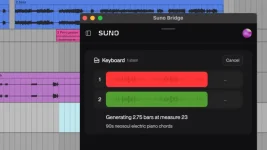
Suno Bridge puts AI-made vocals and instruments right into Ableton Live 12 projects. The beta app runs on Mac, and access is locked to Premier members. Producers can type a prompt, get fresh audio, and have it land right on their track with no need to move clips by hand.
But there is a catch. Bridge runs as a separate app, and Ableton must stay open with it. Suno says each new part can match the song's beat, pitch, chords, and style. A vocal hook or a new bass part can fit the track as it stands.
For more control, producers can mark a part of the song in Arrangement View. Setting the range from bar 9 through bar 16 gives Bridge eight bars to fill. Each clip then lands in sync, based on the firm's claims.
And the cost? The app is free, but each request burns 10 credits. Premier costs $30 a month or $288 per year, with 10,000 credits each month. Bridge keeps its output separate from the main Suno library, which may help users keep their work in check.
Here is the part that may give some producers pause. Bridge sends the chosen Ableton project and its audio to a Suno account. The firm says this helps its AI read the song's context. It seeks consent when it needs files that it cannot access.
Copyright checks play a role as well. Suno says its filters block any flagged audio from going into its system. If a track mixes fresh work with protected songs, only the flagged parts face a block. Details on file storage and use sit in its privacy rules and terms.
Yet the legal side gets more complex. Users keep the rights to what they submit, but Suno gets a license with no fixed end and no right to revoke it. That grant spans content use, ads, sales, service upgrades, and AI model work.
There is more fine print. Anyone who sends audio must assure Suno that no third party needs a fee or permit for its use. That covers AI training and model tweaks as well. For producers who guard their stems, that clause may be worth a close read.
Suno also says Ableton had no role in making Bridge. Support for other systems and DAWs is on its roadmap, though the firm has yet to name them. Mac users with the right setup get first access.
This is not Suno's first push into music tools. Suno Studio gave Premier users a full DAW after the firm bought WavTool, a browser-based music app. Bridge takes a new route by working with software that producers already use.
Meanwhile, Suno's v6 AI models came from work with Warner Music Group, BMG, and Believe, per the firm. Universal Music Group and Sony Music Entertainment have not made license deals with Suno, and both filed fresh suits over its AI music tech.
The labels say Suno used 60,202 sound recordings without a license. Their case also targets v6, which they claim stems from the same alleged misuse of music. Those are claims in court, not proven facts.
On the business side, CEO and co-founder Mikey Shulman says Suno has moved well past 2 million paid users and $300 million in yearly recurring sales. The firm also got more than $400 million in Series D funds, with a $5.4 billion valuation after the deal.
Bridge may give beat makers a fast way to fill gaps in songs. Still, the file upload rules, usage rights, and legal disputes give them a fair bit to weigh before adding AI parts to their sessions.