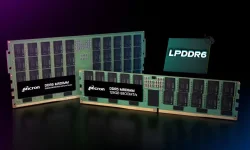
JEDEC has released the LPDDR6 memory standard that promises better performance and efficiency for mobile devices. The new standard replaces LPDDR5 and LPDDR5X memory types that companies have been using. Tech giants will use LPDDR6 across many sectors including AI edge computing, client systems, data centers and cars. The memory standard brings major improvements that will change how devices work. Companies spent years developing the technology through dedicated committee work.
The LPDDR6 memory features a Dual Sub-Channel Architecture that splits each die into two sub-channels with 12 DQs each. The system supports flexible 32B and 64B burst lengths for better performance. LPDDR5 used 16 DQ lines per channel but LPDDR6 cuts that down to 2x12 for faster access speeds. The new design reduces latency problems that slowed down older memory types. Engineers built the system to handle demanding applications better than previous versions.
Power efficiency gets a major boost through lower voltage operations that cut dynamic power consumption. LPDDR6 includes Dynamic Voltage Frequency Scaling for Low Power that adjusts voltage during low-frequency work. Dynamic Efficiency Mode allows single sub-channel operation during low-power states. The changes deliver noticeable improvements over LPDDR5 when devices need to save battery life. Users will see longer battery life on their phones and tablets.
Security features include On-Die Error Correction, CA Parity plus MBIST, Per Row Activation Counting and Meta Region Carve-out capabilities. These tools catch memory errors and protect data integrity while devices run demanding programs. Major companies like MediaTek, Micron, Samsung, SK Hynix and Qualcomm Technologies plan to adopt the new standard first.
The LPDDR6 memory features a Dual Sub-Channel Architecture that splits each die into two sub-channels with 12 DQs each. The system supports flexible 32B and 64B burst lengths for better performance. LPDDR5 used 16 DQ lines per channel but LPDDR6 cuts that down to 2x12 for faster access speeds. The new design reduces latency problems that slowed down older memory types. Engineers built the system to handle demanding applications better than previous versions.
Power efficiency gets a major boost through lower voltage operations that cut dynamic power consumption. LPDDR6 includes Dynamic Voltage Frequency Scaling for Low Power that adjusts voltage during low-frequency work. Dynamic Efficiency Mode allows single sub-channel operation during low-power states. The changes deliver noticeable improvements over LPDDR5 when devices need to save battery life. Users will see longer battery life on their phones and tablets.
Security features include On-Die Error Correction, CA Parity plus MBIST, Per Row Activation Counting and Meta Region Carve-out capabilities. These tools catch memory errors and protect data integrity while devices run demanding programs. Major companies like MediaTek, Micron, Samsung, SK Hynix and Qualcomm Technologies plan to adopt the new standard first.