A limiter can flatten a peak so completely that the original transient shape is no longer present in the finished waveform. Upward expansion can make surviving peaks stand taller again, but it cannot recover information that has already been removed.
This distinction matters because “restore dynamics” gets used loosely in audio. A track can sound livelier after expansion without returning to its pre-limited state. You are reshaping what remains, not rewinding the processing history.
The useful idea here is surviving dynamic contrast. If a snare transient still has a measurable crest above its sustain, expansion can exaggerate that crest. Attack, release, ratio, threshold, and range then decide how quickly and how far the peak moves.
Heavily compressed material often retains enough envelope variation for this to work. Fast compression may have reduced the front edge without erasing it, while limiting may have narrowed several peaks without making every one identical. Small differences remain, and an expander can turn those small differences into larger ones.
The result can be convincing because your ear responds strongly to envelope shape. A few decibels of extra contrast at the front of a kick or snare can change its apparent punch more than a broad EQ boost. None of this proves the original transient has been recovered sample for sample.
Clipping is harsher still. The waveform top can be cut or reshaped, so part of the original contour disappears rather than merely becoming quieter. Raising the remaining peak cannot recreate the missing samples any more than lowering a threshold can tell you their exact former values.
Specialized restoration methods can go further because they attempt to estimate the processing that damaged the signal. The paper model-based restoration of clipped dynamics describes an inverse approach built around a model of brickwall limiting, which is a different task from ordinary upward expansion.
Even model-based restoration has to infer what may have happened. A conventional expander is simpler. It reacts to the level and envelope it receives now, so its success depends on how much usable contrast survived earlier compression, limiting, clipping, saturation, or encoding.
Set the threshold so the expander catches genuine attacks rather than every loud syllable, cymbal wash, or sustained note. A very low threshold can turn the whole upper half of the performance into a level boost, which increases peak level without restoring useful movement. More range is not automatically more repair.
Fast attack usually makes sense when the surviving transient is short, but extremely abrupt gain changes can sound edgy. Release matters just as much because it determines whether the added gain falls away around the transient or hangs into the body of the sound. Poor timing can create a larger waveform while making the performance feel less natural.
Headroom also matters. Upward expansion creates higher peaks, so a track already sitting close to full scale can run straight into another limiter or clipper after the expander. You can end up manufacturing punch and then shaving it off again one plugin later.
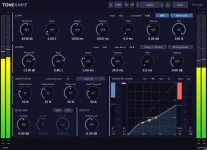
This is where ToneKnife’s upward expansion and compression controls become more interesting than the simple idea of “undoing compression.” Expansion can rebuild contrast where contrast still exists, while compression can restrain whatever becomes too aggressive afterward. Used carefully, the pair can reshape dynamics without pretending the original waveform is still hiding underneath.
This distinction matters because “restore dynamics” gets used loosely in audio. A track can sound livelier after expansion without returning to its pre-limited state. You are reshaping what remains, not rewinding the processing history.
Upward expansion works only with surviving level differences
Upward expansion increases the level difference between parts of a signal, usually by adding gain once the signal crosses a threshold. A drum hit that still rises slightly above the surrounding body gives the processor something useful to grab. Increase that difference and the hit can feel sharper, more animated, and less pinned down.The useful idea here is surviving dynamic contrast. If a snare transient still has a measurable crest above its sustain, expansion can exaggerate that crest. Attack, release, ratio, threshold, and range then decide how quickly and how far the peak moves.
Heavily compressed material often retains enough envelope variation for this to work. Fast compression may have reduced the front edge without erasing it, while limiting may have narrowed several peaks without making every one identical. Small differences remain, and an expander can turn those small differences into larger ones.
The result can be convincing because your ear responds strongly to envelope shape. A few decibels of extra contrast at the front of a kick or snare can change its apparent punch more than a broad EQ boost. None of this proves the original transient has been recovered sample for sample.
Hard limiting and clipping create a different problem
A brickwall limiter does more than make peaks quieter when it is driven hard. Several different input peaks can leave the processor at nearly the same output ceiling, which reduces the clues needed to infer their original heights. Once distinct peaks collapse toward one level, a simple expander has no reliable way to know which one used to be larger.Clipping is harsher still. The waveform top can be cut or reshaped, so part of the original contour disappears rather than merely becoming quieter. Raising the remaining peak cannot recreate the missing samples any more than lowering a threshold can tell you their exact former values.
Specialized restoration methods can go further because they attempt to estimate the processing that damaged the signal. The paper model-based restoration of clipped dynamics describes an inverse approach built around a model of brickwall limiting, which is a different task from ordinary upward expansion.
Even model-based restoration has to infer what may have happened. A conventional expander is simpler. It reacts to the level and envelope it receives now, so its success depends on how much usable contrast survived earlier compression, limiting, clipping, saturation, or encoding.
Threshold and timing decide whether the repair sounds believable
The first practical check is the waveform and the sound together. Look for peaks that still rise above the body of the signal, then listen for whether those peaks correspond to the attacks you actually want to emphasize. Flat-topped sections and long runs pinned near one ceiling are warning signs.Set the threshold so the expander catches genuine attacks rather than every loud syllable, cymbal wash, or sustained note. A very low threshold can turn the whole upper half of the performance into a level boost, which increases peak level without restoring useful movement. More range is not automatically more repair.
Fast attack usually makes sense when the surviving transient is short, but extremely abrupt gain changes can sound edgy. Release matters just as much because it determines whether the added gain falls away around the transient or hangs into the body of the sound. Poor timing can create a larger waveform while making the performance feel less natural.
Headroom also matters. Upward expansion creates higher peaks, so a track already sitting close to full scale can run straight into another limiter or clipper after the expander. You can end up manufacturing punch and then shaving it off again one plugin later.
This is where ToneKnife’s upward expansion and compression controls become more interesting than the simple idea of “undoing compression.” Expansion can rebuild contrast where contrast still exists, while compression can restrain whatever becomes too aggressive afterward. Used carefully, the pair can reshape dynamics without pretending the original waveform is still hiding underneath.