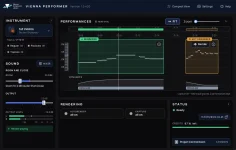
Vienna Symphonic Library has launched Vienna Performer, an AI tool that turns written orchestral parts into played audio without writing any music itself. Composers keep control of the notes, while the plugin handles the details that make a part sound like a real musician played it.
The workflow is pretty simple. Users write their parts in a DAW or score editor, then let Vienna Performer render the audio back onto the track. No text prompts or AI-made melodies. Every pitch, dynamic choice, and phrase still starts with the composer.
Behind the scenes, the models draw on special recording sessions with the Vienna Synchron Orchestra. VSL captured those players at its Vienna Synchron Stage, then used that material to teach the system how real instruments move between notes, handle attacks, and shape small timing shifts.
And the input demands are quite modest. Note duration, MIDI velocity, one dynamics CC lane, and a few switches for playing styles give the system what it needs. Ensemble sounds come from actual groups playing together rather than layers of solo players.
Nine instruments are ready at launch. Solo options cover Violin, Cello, Flute, Clarinet, and French Horn. String groups include first and second violins, violas, and cellos. A solo trumpet and double bass section are next, with future additions covered by every plan.
There's a handy link to VSL's existing catalog as well. The same Vienna hall and players feature in its Synchron libraries, which helps the rendered parts fit with those sounds. Matching Synchron Player presets come ready for use, cutting down setup work.
Rights are fairly clear. Composers can use their finished audio in paid projects without extra license charges, even after they cancel a plan. VSL also says it deletes uploaded music and finished renders after delivery, never uses either for model training, and takes no rights over the submitted work.
Pricing starts at €9.99 a month for 140 minutes of rendering. Standard costs €19.99 with 360 minutes, while Pro reaches €49.99 for 1,000 minutes. Annual bills are €99.90, €199.90, and €499.90, with the same monthly minute limits.
One detail worth checking is how usage gets counted. A two-minute piece with 12 instrument tracks eats 24 render minutes, not just two. Extra capacity comes in €50 purchases, which may matter for composers working on larger scores.
Vienna Performer runs on macOS and Windows in VST, VST3, AU, and AAX formats. It needs a VSL account and a live internet connection, with no offline or standalone mode. For orchestral writing, the pitch is clear. Keep the creative decisions human, and let the software handle the performance details.