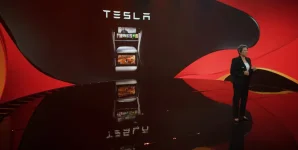
Tesla has deployed xAI's Grok artificial intelligence assistant across its vehicle fleet with significant hardware restrictions. The AI system operates exclusively on AMD Ryzen-powered infotainment platforms while excluding older Intel-based units from access. Performance constraints prevent Intel processors from supporting the computational demands of the AI assistant. Vehicle owners must navigate to Settings, then Software, followed by Additional Vehicle Info to determine their system's compatibility. The integration arrives through Tesla's 2025.26 software update for qualifying vehicles.
AMD's Ryzen Embedded V3000 Series processors power the compatible infotainment systems after Tesla transitioned from Intel platforms in 2021. These chips feature Zen 3 architecture with configurations reaching eight processing cores. The advanced computing capabilities enable edge AI processing that older Intel Atom processors cannot handle effectively. Grok's functionality remains limited to user interaction without vehicle control access. The AI cannot manipulate navigation systems or climate controls within Tesla automobiles.
The automotive manufacturer previously relied on Intel processors before adopting AMD's embedded solutions for enhanced performance. Ryzen-based systems provide the computational foundation necessary for running sophisticated AI models within vehicle environments. Tesla's hardware upgrade strategy enables advanced software features while maintaining system stability. The selective deployment demonstrates how processing power determines feature availability across different vehicle generations.
AMD's Ryzen Embedded V3000 Series processors power the compatible infotainment systems after Tesla transitioned from Intel platforms in 2021. These chips feature Zen 3 architecture with configurations reaching eight processing cores. The advanced computing capabilities enable edge AI processing that older Intel Atom processors cannot handle effectively. Grok's functionality remains limited to user interaction without vehicle control access. The AI cannot manipulate navigation systems or climate controls within Tesla automobiles.
The automotive manufacturer previously relied on Intel processors before adopting AMD's embedded solutions for enhanced performance. Ryzen-based systems provide the computational foundation necessary for running sophisticated AI models within vehicle environments. Tesla's hardware upgrade strategy enables advanced software features while maintaining system stability. The selective deployment demonstrates how processing power determines feature availability across different vehicle generations.