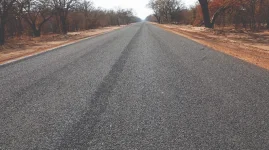
Zimbabwe's big highway fix is almost done. They've only got about 38 kilometers left on the Harare to Beitbridge road after finishing over 544 kilometers. This major corridor linking to South Africa is getting a full upgrade to a dual carriageway. The project involves contractors like Tensor Systems, Exodus and Company, Fossil Contracting, Masimba Construction, and Bitumen World. Key spots like the Masvingo Trumpet Interchange and the Mucheke Bridge are wrapping up to ease city traffic. Four new bridges in Masvingo, worth millions, are part of the deal.
Work is also happening all over the country. On the Bulawayo to Victoria Falls road, a chunk is already open while the rest gets built by eight different contractors. That project hired over six hundred local workers, nearly a third of them women. Other roads moving forward include the Bulawayo to Nkayi route and the Christmas Pass By-Pass in Manicaland, which is about a fifth done. The Gwanda to Maphisa road, a priority before some 2026 events, has started its first section with the goal of finishing early next year to connect rural areas.
These projects aim to cut travel time and boost local economies. The improved roads should help with trade, tourism, and getting people to services like hospitals and schools. The focus on hiring from nearby communities means money and skills are staying local. The overall push is to modernize the country's key transport routes for better regional connectivity.
Work is also happening all over the country. On the Bulawayo to Victoria Falls road, a chunk is already open while the rest gets built by eight different contractors. That project hired over six hundred local workers, nearly a third of them women. Other roads moving forward include the Bulawayo to Nkayi route and the Christmas Pass By-Pass in Manicaland, which is about a fifth done. The Gwanda to Maphisa road, a priority before some 2026 events, has started its first section with the goal of finishing early next year to connect rural areas.
These projects aim to cut travel time and boost local economies. The improved roads should help with trade, tourism, and getting people to services like hospitals and schools. The focus on hiring from nearby communities means money and skills are staying local. The overall push is to modernize the country's key transport routes for better regional connectivity.