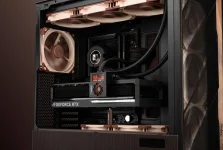
12VHPWR can carry up to 600 watts through a compact 16-pin interface, so a weak contact can turn resistance into heat quickly. The 12VHPWR melting issue is therefore less about the whole cable being overloaded and more about current concentrating where contact resistance rises. Partial insertion, connector movement, contamination, damaged terminals, or cable strain can leave a few contacts doing more work than intended.
12V-2x6 improves the mating sequence, but it does not make connector condition irrelevant after months of use or a case rebuild. The 12V-2x6 revised mating behavior makes a shallow insertion less likely to authorize normal high-power operation, while the WireView Pro II Noctua Edition monitoring hardware watches individual 12V-2x6 conductors for uneven current.
Why 12VHPWR cables melt becomes clearer once you stop treating the connector as one electrical contact. Its main power terminals share the load, so one poor connection can raise resistance at a very small spot. Since resistive heating rises with the square of current, a modest contact problem can become a serious hot spot under sustained GPU load.
Cable routing matters after insertion too. A tight 12VHPWR cable bend radius close to the plug can keep sideways force on the housing, especially when a glass side panel presses against a stiff lead. Good 12VHPWR cable routing leaves room for the connector body and the first section of cable instead of making the socket carry the mechanical load.
Adapters add another mating interface and therefore another place where contact quality matters. 12VHPWR adapter melting should be investigated at every junction rather than blamed on one end by default. Damage at both ends of an RTX 5090 power cable can leave the GPU and PSU terminations compromised, so inspect both ends after a hot-plastic smell, unexplained shutdown, or visible discoloration.
A useful 12VHPWR cable tester needs more than a simple continuity check if the problem only appears under load. Per-conductor current data can reveal whether the load is spreading normally, while six-channel current balancing in Aqua Computer's Ampinel can react when distribution becomes abnormal. Monitoring cannot repair a damaged terminal, but it can expose trouble before melted plastic becomes the first warning.
12VHPWR cable temperature is another useful signal, although sensor placement matters. A hot terminal can be warmer than the outside of the sleeving, so a quick infrared reading on the cable jacket is not a substitute for sensing close to the connector's thermal path. Temperature-sensing 12V-2x6 cables in LIAN LI's EDGE Platinum V2 pair heat tracking with software monitoring, which is more informative than treating one surface reading as proof of 12VHPWR cable safety.
There is no useful universal 12VHPWR safe temperature that applies to every sensor position and cable design. A reading near the terminal, a probe farther down the conductors, and the outside jacket can all react differently to the same developing fault. Trends under comparable GPU loads matter more than pretending one number fits every setup.
Use only modular PSU cables approved for the exact power supply model. PSU-side pinouts are not universal, so a physically fitting cable from another family can be electrically wrong. A direct vendor-approved cable also removes unnecessary junctions when the alternative is an adapter chain, although a direct cable still depends on clean, fully seated contacts.
RTX 5090 12VHPWR melting reports are a reminder that high-draw hardware leaves less room for bad contact, but whether 12VHPWR is safe in a particular build still depends heavily on connection quality and inspection. If you find a 12VHPWR melted cable, browned plastic, deformed terminals, or a connector that feels fused after a thermal event, shut the system down and do not keep load-testing damaged hardware.
12V-2x6 improves the mating sequence, but it does not make connector condition irrelevant after months of use or a case rebuild. The 12V-2x6 revised mating behavior makes a shallow insertion less likely to authorize normal high-power operation, while the WireView Pro II Noctua Edition monitoring hardware watches individual 12V-2x6 conductors for uneven current.
Why 12VHPWR cables melt becomes clearer once you stop treating the connector as one electrical contact. Its main power terminals share the load, so one poor connection can raise resistance at a very small spot. Since resistive heating rises with the square of current, a modest contact problem can become a serious hot spot under sustained GPU load.
Poor contact turns normal power into local heat
The 12VHPWR cable sense pins communicate the available power state, but they cannot confirm that every main terminal has equally good electrical contact. A plug can look nearly seated while one or more power contacts are making a poorer connection than their neighbors, which is why a visual glance alone is not a complete check.Cable routing matters after insertion too. A tight 12VHPWR cable bend radius close to the plug can keep sideways force on the housing, especially when a glass side panel presses against a stiff lead. Good 12VHPWR cable routing leaves room for the connector body and the first section of cable instead of making the socket carry the mechanical load.
Adapters add another mating interface and therefore another place where contact quality matters. 12VHPWR adapter melting should be investigated at every junction rather than blamed on one end by default. Damage at both ends of an RTX 5090 power cable can leave the GPU and PSU terminations compromised, so inspect both ends after a hot-plastic smell, unexplained shutdown, or visible discoloration.
Current imbalance matters more than total watts
Total GPU wattage is a blunt instrument for diagnosing a 12VHPWR cable failure. A system can remain within the connector's nominal power rating while one conductor carries a disproportionate share because another contact has gone high-resistance. Watching only total board power can miss the imbalance that is creating the local hot spot.A useful 12VHPWR cable tester needs more than a simple continuity check if the problem only appears under load. Per-conductor current data can reveal whether the load is spreading normally, while six-channel current balancing in Aqua Computer's Ampinel can react when distribution becomes abnormal. Monitoring cannot repair a damaged terminal, but it can expose trouble before melted plastic becomes the first warning.
12VHPWR cable temperature is another useful signal, although sensor placement matters. A hot terminal can be warmer than the outside of the sleeving, so a quick infrared reading on the cable jacket is not a substitute for sensing close to the connector's thermal path. Temperature-sensing 12V-2x6 cables in LIAN LI's EDGE Platinum V2 pair heat tracking with software monitoring, which is more informative than treating one surface reading as proof of 12VHPWR cable safety.
There is no useful universal 12VHPWR safe temperature that applies to every sensor position and cable design. A reading near the terminal, a probe farther down the conductors, and the outside jacket can all react differently to the same developing fault. Trends under comparable GPU loads matter more than pretending one number fits every setup.
Lower risk comes from installation and rechecks
How to avoid 12VHPWR melting starts with basic mechanical checks. Seat the plug squarely until the latch engages, confirm there is no obvious gap, give the lead room before its first bend, and make sure the side panel does not push the cable toward the socket. Recheck the connection after transporting the PC, changing the GPU, or rerouting cables.Use only modular PSU cables approved for the exact power supply model. PSU-side pinouts are not universal, so a physically fitting cable from another family can be electrically wrong. A direct vendor-approved cable also removes unnecessary junctions when the alternative is an adapter chain, although a direct cable still depends on clean, fully seated contacts.
RTX 5090 12VHPWR melting reports are a reminder that high-draw hardware leaves less room for bad contact, but whether 12VHPWR is safe in a particular build still depends heavily on connection quality and inspection. If you find a 12VHPWR melted cable, browned plastic, deformed terminals, or a connector that feels fused after a thermal event, shut the system down and do not keep load-testing damaged hardware.