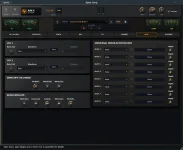
Apex Amp v1.2.0 lets you drag a high-pass, low-shelf, and two peak nodes directly on its pre-emphasis EQ graph. Q for the peak bands can be changed with the mouse wheel, while the live display shows incoming frequency activity as you play.
The prettier graph is not the important part. Pre-emphasis decides which frequencies hit the gain structure hardest. A small move before distortion can alter the feel of the amp rather than merely changing its finished frequency balance.
The new Apex Amp visual EQ controls make those moves quicker, but placement still matters more than graphics. If you treat the pre-emphasis section like a normal mix EQ, you can easily chase problems from the wrong end of the signal chain.
Cut the same frequency before the amp, and it reaches the nonlinear stages with less energy. The result can feel cleaner or tighter even if you later restore some of that frequency with post EQ.
Research into nonlinear guitar amplifier modelling is built around the same basic reality. Guitar amp distortion circuits do not behave like a simple volume control, because their output changes according to the level and spectral shape of the signal entering them.
A pre-EQ boost around the mids can do more than make a guitar sound mid-heavy. It can make those frequencies break up sooner, changing pick response and the balance of harmonics created by the amp.
A post-EQ mid boost cannot recreate that exact behavior. It can raise the mids after distortion, but it cannot go back and make those frequencies drive the earlier nonlinear stages differently.
Low frequencies carry plenty of energy, and heavy saturation can turn too much of it into a soft, congested attack. Fast riffs lose definition when the distorted bottom end spreads too far. Pulling unnecessary lows down before the amp can keep that blur from developing in the first place.
The trick is restraint. Raise the high-pass filter too far and palm-muted notes lose their physical weight, while lower strings can start sounding smaller than the rest of the guitar.
A low shelf gives you a softer option when a hard cutoff feels excessive. Instead of removing everything beneath one point, you can reduce the bottom end gradually and preserve more of the instrument’s body.
Peak bands are useful when the problem is narrower. A broad cut in the low mids can reduce boxiness going into gain. A measured upper-mid boost can make the amp react more aggressively to pick attack without simply turning up the whole input.
Apex Amp v1.2.0 gives its post EQ a moving spectrum display and up to 18 dB of boost or cut in either direction. Such a wide range is useful for correction, although large moves can also disguise a poor choice earlier in the chain.
If the guitar feels loose under the fingers, start by checking the pre-emphasis low end rather than carving huge amounts from the finished tone. If the response feels right but the recorded sound has too much bite, honk, or darkness, post EQ is usually the cleaner place to adjust.
Gain staging also deserves attention before you blame the EQ curve. Boosting several pre-emphasis bands at once raises the level entering the amp. Part of the apparent tonal change may therefore come from driving the preamp harder.
Level-match your experiments when possible. A louder setting can sound more impressive for a few seconds even when the actual frequency decision is worse, and extra input level can make a supposedly subtle EQ move behave like a gain change.
Use exaggerated moves briefly when learning the pre-emphasis section. Cut the lows hard, push one mid band, and listen to how the distortion itself changes. Return toward smaller values once you know what each move is actually doing.
The prettier graph is not the important part. Pre-emphasis decides which frequencies hit the gain structure hardest. A small move before distortion can alter the feel of the amp rather than merely changing its finished frequency balance.
The new Apex Amp visual EQ controls make those moves quicker, but placement still matters more than graphics. If you treat the pre-emphasis section like a normal mix EQ, you can easily chase problems from the wrong end of the signal chain.
Pre-emphasis changes what the amp distorts
Distortion is nonlinear. The order of operations matters. Boost a frequency before a nonlinear stage, and you give that part of the guitar signal more level to push into saturation, compression, and harmonic generation.Cut the same frequency before the amp, and it reaches the nonlinear stages with less energy. The result can feel cleaner or tighter even if you later restore some of that frequency with post EQ.
Research into nonlinear guitar amplifier modelling is built around the same basic reality. Guitar amp distortion circuits do not behave like a simple volume control, because their output changes according to the level and spectral shape of the signal entering them.
A pre-EQ boost around the mids can do more than make a guitar sound mid-heavy. It can make those frequencies break up sooner, changing pick response and the balance of harmonics created by the amp.
A post-EQ mid boost cannot recreate that exact behavior. It can raise the mids after distortion, but it cannot go back and make those frequencies drive the earlier nonlinear stages differently.
Low cuts can tighten gain before it turns muddy
Apex’s own tone material shows a tightening pre-HPF set to 120 Hz in one high-gain example. It is only an example. Tuning, pickups, playing style, and the amount of gain all change where the useful cutoff lands.Low frequencies carry plenty of energy, and heavy saturation can turn too much of it into a soft, congested attack. Fast riffs lose definition when the distorted bottom end spreads too far. Pulling unnecessary lows down before the amp can keep that blur from developing in the first place.
The trick is restraint. Raise the high-pass filter too far and palm-muted notes lose their physical weight, while lower strings can start sounding smaller than the rest of the guitar.
A low shelf gives you a softer option when a hard cutoff feels excessive. Instead of removing everything beneath one point, you can reduce the bottom end gradually and preserve more of the instrument’s body.
Peak bands are useful when the problem is narrower. A broad cut in the low mids can reduce boxiness going into gain. A measured upper-mid boost can make the amp react more aggressively to pick attack without simply turning up the whole input.
Post EQ fixes tone without rewriting the distortion
Post EQ works on a different problem. Once the amp, power section, and cabinet processing have created the distorted tone, post EQ can rebalance what you hear without changing which frequencies originally pushed the amp into saturation.Apex Amp v1.2.0 gives its post EQ a moving spectrum display and up to 18 dB of boost or cut in either direction. Such a wide range is useful for correction, although large moves can also disguise a poor choice earlier in the chain.
If the guitar feels loose under the fingers, start by checking the pre-emphasis low end rather than carving huge amounts from the finished tone. If the response feels right but the recorded sound has too much bite, honk, or darkness, post EQ is usually the cleaner place to adjust.
Gain staging also deserves attention before you blame the EQ curve. Boosting several pre-emphasis bands at once raises the level entering the amp. Part of the apparent tonal change may therefore come from driving the preamp harder.
Level-match your experiments when possible. A louder setting can sound more impressive for a few seconds even when the actual frequency decision is worse, and extra input level can make a supposedly subtle EQ move behave like a gain change.
Use exaggerated moves briefly when learning the pre-emphasis section. Cut the lows hard, push one mid band, and listen to how the distortion itself changes. Return toward smaller values once you know what each move is actually doing.