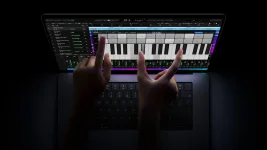
Apple has brought touchscreens to the MacBook Pro for the first time. Its new PROLED XDR models also feature tandem OLED panels, slimmer bodies, and the return of the glowing Apple logo, with M5-series chips handling the work.
The screen is the main attraction here. Both models can hit 2,000 nits of peak HDR brightness and hold 1,000 nits across the full panel for HDR and SDR use. That gives the new display some serious specs for visual work.
OLED could also help music producers save battery power. Dark pixels tend to use less energy, which may benefit anyone running audio apps in Dark Mode. Whether that leads to a clear gain during real sessions still needs testing.
And Apple has managed to trim the hardware. The 14-inch version measures 1.5 cm thick, while its 16-inch sibling comes in at 1.6 cm. Both are thinner than the regular LCD-based MacBook Pro models.
Weight is another win. A 14-inch PROLED XDR unit weighs three pounds with an M5 Pro or 3.1 pounds with an M5 Max. That's about half a pound less than its standard Pro rival.
Even the MacBook Air comparison gets odd. The new 14-inch Pro weighs less than the 15-inch Air by 0.2 to 0.3 pounds and sits just 0.3 to 0.4 pounds above the smaller 13-inch Air.
But the smaller body has not meant weaker performance in early tests. One Logic Pro test found that an M5 Max MacBook Pro with 128GB of shared memory kept pace with a Mac Studio using the same chip and memory setup.
There's a catch, though. The laptop's fans became quite loud while handling that load. Apple appears to favor keeping the chip running at full speed rather than cutting performance to limit heat.
For producers with large sessions, that trade-off may matter. A stable level of processing power can help during heavy projects, though fan noise could be a problem when recording near open microphones.
The display also loses the old camera notch. Apple has fitted a Dynamic Island instead, bringing an iPhone feature to its laptop range.
That change has a practical use beyond looks. Under macOS 27.2, screen brightness and volume feedback appears in the island, making those settings easier to check at a glance.
Touch control is the other big shift. Users can interact with macOS through Multi-Touch gestures right on the screen, rather than relying only on the trackpad and keyboard.
Early hands-on use found the touch response smooth, though the full value of the feature for daily Mac work remains an open question. Music apps, in particular, may have new ways to handle controls once developers make use of the hardware.
Apple has kept the main M5 chip range from its regular Pro laptops while adding a different screen and physical design. The result is a lighter machine with more ways to interact, without a reported loss of peak processing power in the initial Logic Pro comparison.
For audio users, the main questions are battery life, fan noise, and how well touch fits into real studio work. The new features are clear, but their value will depend on how the laptop performs across longer sessions.