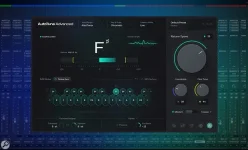
AutoTune Advanced’s MIDI Perform mode lets incoming MIDI notes become pitch targets, so a controller or recorded MIDI track can steer correction. The vocal still enters as audio, while MIDI decides which pitch targets the tuner can use during the performance.
The AutoTune Advanced DVA and performance-control feature set puts MIDI Perform beside the 78-note Visual Keyboard rather than treating it as ordinary knob automation. In practice, MIDI control in Antares AutoTune can mean two different jobs. MIDI notes can define musical targets, while controller data can be used for other parameter-control workflows depending on the product and host.
A working AutoTune MIDI input path therefore needs the vocal audio and the MIDI performance to reach the intended plug-in instance. Once you understand how to use MIDI with AutoTune, the important question is less about the keyboard model and more about what the incoming notes are being asked to do.
A prerecorded MIDI line is useful when the same melodic targets need to repeat on every playback, while a keyboard keeps the target changes performable in real time.
MIDI target notes are not the same as changing the permitted scale. MIDI Repitch and scale definition solve those jobs differently, with one making played notes the destination and the other changing only the set of legal correction notes.
AutoTune Advanced settings still need sensible detection before MIDI becomes useful. A wrong melodic target remains a wrong target even when the routing is perfect, so an AutoTune key finder can settle the harmonic starting point before MIDI-driven target control takes over.
For AutoTune MIDI control in Ableton, focus on the route from a MIDI track to the plug-in receiving the vocal rather than expecting
The AutoTune Advanced DVA and performance-control feature set puts MIDI Perform beside the 78-note Visual Keyboard rather than treating it as ordinary knob automation. In practice, MIDI control in Antares AutoTune can mean two different jobs. MIDI notes can define musical targets, while controller data can be used for other parameter-control workflows depending on the product and host.
A working AutoTune MIDI input path therefore needs the vocal audio and the MIDI performance to reach the intended plug-in instance. Once you understand how to use MIDI with AutoTune, the important question is less about the keyboard model and more about what the incoming notes are being asked to do.
MIDI Perform changes where pitch targets come from
Normal automatic tuning starts from a key, scale, and the notes allowed by the plug-in’s keyboard. MIDI Perform changes that relationship by letting incoming MIDI notes become the active targets. You can control AutoTune with MIDI from a keyboard during a take or feed it a written part when the melody is already decided.A prerecorded MIDI line is useful when the same melodic targets need to repeat on every playback, while a keyboard keeps the target changes performable in real time.
MIDI target notes are not the same as changing the permitted scale. MIDI Repitch and scale definition solve those jobs differently, with one making played notes the destination and the other changing only the set of legal correction notes.
AutoTune Advanced settings still need sensible detection before MIDI becomes useful. A wrong melodic target remains a wrong target even when the routing is perfect, so an AutoTune key finder can settle the harmonic starting point before MIDI-driven target control takes over.
DAW routing decides whether the notes arrive
Using AutoTune with a MIDI input gives you a two-stream setup. Audio carries the voice, MIDI carries note events, and the DAW has to deliver both to the same processing job. Routing varies between hosts, so copying a track layout from another DAW can leave the plug-in hearing the singer but never receiving the notes.For AutoTune MIDI control in Ableton, focus on the route from a MIDI track to the plug-in receiving the vocal rather than expecting