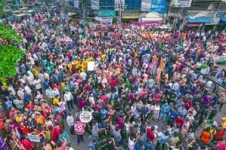
The July Uprising of 2024, initially seen as a movement against the government of Sheikh Hasina, resulted in an interim administration led by Muhammad Yunus starting on Aug. 8, 2024. Since then, law and order in Bangladesh have deteriorated, with a sharp rise in mob violence and other crimes that appear to target dissenters and opponents of the interim government. Over the past year, critics have argued that the promises of a restored democracy have not been fulfilled, as opposition voices face increasing restrictions.
Key symbols of the Liberation War, such as Sheikh Mujibur Rahman, have come under attack through the removal of his image from currency, renaming of institutions, and cancellation of related national holidays. The Awami League and its affiliates have faced bans and large-scale arrests, including the demolition of significant properties and crackdowns under campaigns like Operation Devil Hunt. Other political parties, such as Jatiya Party, have also been attacked, further escalating tensions.
The interim government has introduced a 28-point July Declaration that seeks to redefine national history and exclude the Awami League’s contributions since independence. Despite bans, the Awami League maintains support, particularly among older citizens. Recent surveys indicate public opinion is divided on whether the party should be allowed to contest in the next elections. With national polls expected in February, concerns remain that Bangladesh’s next phase of democracy could lack an active opposition.
Key symbols of the Liberation War, such as Sheikh Mujibur Rahman, have come under attack through the removal of his image from currency, renaming of institutions, and cancellation of related national holidays. The Awami League and its affiliates have faced bans and large-scale arrests, including the demolition of significant properties and crackdowns under campaigns like Operation Devil Hunt. Other political parties, such as Jatiya Party, have also been attacked, further escalating tensions.
The interim government has introduced a 28-point July Declaration that seeks to redefine national history and exclude the Awami League’s contributions since independence. Despite bans, the Awami League maintains support, particularly among older citizens. Recent surveys indicate public opinion is divided on whether the party should be allowed to contest in the next elections. With national polls expected in February, concerns remain that Bangladesh’s next phase of democracy could lack an active opposition.