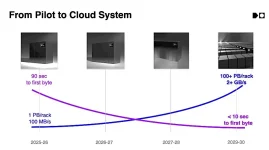
A tech company called Cerabyte wants to change how we store massive amounts of data forever. They created something called Ceramic Nano Memory that could hold way more information than anything we have today. The company plans to cram over 100 petabytes of data into a single storage rack within six years. That equals about 100 million gigabytes packed into one unit. Their system would work faster and cheaper than current storage methods.
Right at this moment, Cerabyte runs a test version that stores one petabyte per rack. The pilot system moves data at 100 megabytes per second and takes 90 seconds to access files. Company engineers expect major improvements around 2027 when they roll out their next upgrade. The enhanced version will store dozens of petabytes and cut access time nearly in half. Transfer speeds will more than double from their current rates.
The technology works like magic with ultra-thin glass panels and ceramic coatings. Scientists use powerful lasers to burn tiny holes into the ceramic layer that store data permanently. These holes create patterns that special cameras can read back later. Small tablets measuring 9 centimeters square fit into cartridges that robots handle automatically. The system beats traditional tape storage with twice the speed and lasts over 100 years.
Major investors have pumped $10 million into the company along with $4 million in grants. Storage costs could drop from thousands of dollars per petabyte to just a few dollars monthly. Future upgrades might reach exabyte levels using advanced helium-ion technology.
Right at this moment, Cerabyte runs a test version that stores one petabyte per rack. The pilot system moves data at 100 megabytes per second and takes 90 seconds to access files. Company engineers expect major improvements around 2027 when they roll out their next upgrade. The enhanced version will store dozens of petabytes and cut access time nearly in half. Transfer speeds will more than double from their current rates.
The technology works like magic with ultra-thin glass panels and ceramic coatings. Scientists use powerful lasers to burn tiny holes into the ceramic layer that store data permanently. These holes create patterns that special cameras can read back later. Small tablets measuring 9 centimeters square fit into cartridges that robots handle automatically. The system beats traditional tape storage with twice the speed and lasts over 100 years.
Major investors have pumped $10 million into the company along with $4 million in grants. Storage costs could drop from thousands of dollars per petabyte to just a few dollars monthly. Future upgrades might reach exabyte levels using advanced helium-ion technology.