A drum transcriber usually has to detect when a hit happens and which kit piece produced it, not find a sustained musical pitch. Kick, snare, hi-hat, tom, and cymbal events are short bursts with very different spectra, so melody-style pitch tracking solves the wrong problem.
This matters because a drum MIDI note usually acts as an instrument address. The note number can trigger a snare or closed hi-hat even when the acoustic sound has no single stable pitch worth converting.
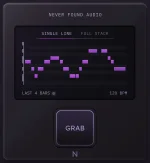
So MG-Mini's pitched audio capture workflow makes sense for vocals, bass, leads, and chords, while a drum loop needs a percussion-specific route. Feeding the same material into both types of converter may produce MIDI in each case, but the data is answering different questions.
The second job is classification. Once the system sees an event, it has to decide whether it came from a kick, snare, tom, hi-hat, cymbal, clap, or another percussion class, depending on how many classes the tool supports.
Some drum converters intentionally keep the vocabulary small. A basic system may only sort events into kick, snare, and hi-hat, which is useful for rebuilding a core groove but does not mean every ride, crash, tom, rimshot, and percussion articulation will emerge on its own dedicated MIDI note.
Recent drum-transcription work pushes further by separating kit pieces before detecting their attacks. The Separate-and-Detect drum transcription model splits audio into kick, snare, tom, hi-hat, and cymbal stems before turning onsets into symbolic events, which helps explain why drum conversion is increasingly treated as classification plus separation rather than pitch extraction.
Those collisions are where simple transient detection starts getting shaky. One obvious peak may contain two or three kit pieces, while the long tail of a crash can sit over quieter snare ghosts and hats that still matter to the groove.
Cymbals are especially awkward because their energy spreads across a broad frequency range and hangs around. A strong crash can mask quieter percussion after the initial strike, so the converter may catch the crash and miss the little events living underneath it.
Hi-hats have another complication. Open and closed hats can begin with similarly sharp attacks, but their sustain and timbre differ, so a useful transcription may need more than the first few milliseconds to decide which articulation happened.
False doubles can appear too. One snare hit may contain several rapid peaks from the stick attack, drum resonance, room reflections, or processing, and an overeager detector can turn those into two MIDI notes instead of one.
Do not compress the life out of the source before conversion either. Heavy limiting can make quiet ghost notes and loud backbeats look more similar in level, while clipping can reshape transients that the detector uses to locate attacks.
Velocity needs a sanity check after conversion. Audio level can inform MIDI velocity, but microphones, compression, bleed, room sound, and the original drum mix all affect level, so a quieter detected hit does not automatically mean the drummer played it softly.
Check classification before quantization. If a snare has been labeled as a hi-hat, snapping it perfectly to the grid only gives you a precisely timed wrong instrument, and replacing whole rows without listening can erase legitimate percussion that landed in an unexpected class.
Keep the original audio running beside the MIDI and audition one kit piece at a time. Missing kick and snare hits are easy to hear in isolation, while hats and cymbals need more patience because sustained metal can hide whether the transcription missed an attack or merely chose a broader class.
Once the hit types are right, preserve the timing that belongs to the performance. Drum transcription earns its keep when it gives you editable triggers for replacing sounds or rebuilding a groove, not when every microscopic deviation gets ironed into the nearest grid line.
This matters because a drum MIDI note usually acts as an instrument address. The note number can trigger a snare or closed hi-hat even when the acoustic sound has no single stable pitch worth converting.
So MG-Mini's pitched audio capture workflow makes sense for vocals, bass, leads, and chords, while a drum loop needs a percussion-specific route. Feeding the same material into both types of converter may produce MIDI in each case, but the data is answering different questions.
Drum transcription is an onset and class problem
The first job is finding the attack. A clean kick gives you a strong transient, while a brushed snare, ghost note, soft hat, or cymbal swell can begin less cleanly and may sit close to another hit.The second job is classification. Once the system sees an event, it has to decide whether it came from a kick, snare, tom, hi-hat, cymbal, clap, or another percussion class, depending on how many classes the tool supports.
Some drum converters intentionally keep the vocabulary small. A basic system may only sort events into kick, snare, and hi-hat, which is useful for rebuilding a core groove but does not mean every ride, crash, tom, rimshot, and percussion articulation will emerge on its own dedicated MIDI note.
Recent drum-transcription work pushes further by separating kit pieces before detecting their attacks. The Separate-and-Detect drum transcription model splits audio into kick, snare, tom, hi-hat, and cymbal stems before turning onsets into symbolic events, which helps explain why drum conversion is increasingly treated as classification plus separation rather than pitch extraction.
Overlapping hits create the nastiest mistakes
A drummer regularly plays several things at once. A kick can land under a crash, a snare can arrive with an open hat, and a tom fill can spill into cymbal wash without leaving clean silence between events.Those collisions are where simple transient detection starts getting shaky. One obvious peak may contain two or three kit pieces, while the long tail of a crash can sit over quieter snare ghosts and hats that still matter to the groove.
Cymbals are especially awkward because their energy spreads across a broad frequency range and hangs around. A strong crash can mask quieter percussion after the initial strike, so the converter may catch the crash and miss the little events living underneath it.
Hi-hats have another complication. Open and closed hats can begin with similarly sharp attacks, but their sustain and timbre differ, so a useful transcription may need more than the first few milliseconds to decide which articulation happened.
False doubles can appear too. One snare hit may contain several rapid peaks from the stick attack, drum resonance, room reflections, or processing, and an overeager detector can turn those into two MIDI notes instead of one.
Clean drum MIDI starts before the converter
Give the system isolated drums when you can. A bass transient, picked guitar, or short vocal consonant inside a full mix can resemble percussion strongly enough to create false triggers, which is why separating the drum stem first can improve a difficult full-song transcription.Do not compress the life out of the source before conversion either. Heavy limiting can make quiet ghost notes and loud backbeats look more similar in level, while clipping can reshape transients that the detector uses to locate attacks.
Velocity needs a sanity check after conversion. Audio level can inform MIDI velocity, but microphones, compression, bleed, room sound, and the original drum mix all affect level, so a quieter detected hit does not automatically mean the drummer played it softly.
Check classification before quantization. If a snare has been labeled as a hi-hat, snapping it perfectly to the grid only gives you a precisely timed wrong instrument, and replacing whole rows without listening can erase legitimate percussion that landed in an unexpected class.
Keep the original audio running beside the MIDI and audition one kit piece at a time. Missing kick and snare hits are easy to hear in isolation, while hats and cymbals need more patience because sustained metal can hide whether the transcription missed an attack or merely chose a broader class.
Once the hit types are right, preserve the timing that belongs to the performance. Drum transcription earns its keep when it gives you editable triggers for replacing sounds or rebuilding a groove, not when every microscopic deviation gets ironed into the nearest grid line.