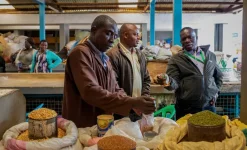
East Africans want cleaner food for the holidays, but trade rules are a mess. Demand for agroecological produce, grown without heavy chemicals, is rising across the region as people worry about health and the environment. Yet experts say weak policy alignment and inconsistent standards at borders are choking the growth of these food systems.
Despite commitments under the East African Community treaty to harmonize trade, smallholder farmers and traders face a maze of non-tariff barriers. These include wildly different lab accreditation rules, uneven phytosanitary inspections, and procedural delays that can reject a shipment accepted next door. A recent EAC report showed registered non-tariff barriers jumped from ten to forty-eight in six months. Trade analysts say this uncertainty is a major structural barrier for small operators on thin margins.
Officials like Kenya's Beatrice Pamela Onyango have pledged support for building trader capacity and promoting agroecological zoning across borders. Improvements like One-Stop Border Posts have cut crossing times significantly, saving economies billions. But specialists warn that without harmonized standards and predictable procedures, large industrial producers will keep dominating trade under both the EAC and the continental free trade area, threatening environmental sustainability. For now, consumer choice is driving the shift, but lasting change needs stronger regional policy alignment to let the clean food movement actually move.
Despite commitments under the East African Community treaty to harmonize trade, smallholder farmers and traders face a maze of non-tariff barriers. These include wildly different lab accreditation rules, uneven phytosanitary inspections, and procedural delays that can reject a shipment accepted next door. A recent EAC report showed registered non-tariff barriers jumped from ten to forty-eight in six months. Trade analysts say this uncertainty is a major structural barrier for small operators on thin margins.
Officials like Kenya's Beatrice Pamela Onyango have pledged support for building trader capacity and promoting agroecological zoning across borders. Improvements like One-Stop Border Posts have cut crossing times significantly, saving economies billions. But specialists warn that without harmonized standards and predictable procedures, large industrial producers will keep dominating trade under both the EAC and the continental free trade area, threatening environmental sustainability. For now, consumer choice is driving the shift, but lasting change needs stronger regional policy alignment to let the clean food movement actually move.