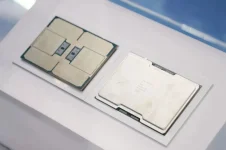
Intel Xeon 7 Diamond Rapids has made a public appearance in Shenzhen, with photos showing the physical chip package. The processor was on display at Tencent's Global Digital Ecosystem Conference, giving hardware watchers an early look at Intel's next server CPU. No performance tests or retail launch came with the reveal.
The reported specs are quite ambitious. Diamond Rapids could reach 256 performance cores, with 16 compute chiplets made using Intel's 18A-P process. Reports also point to as much as 1.28GB of last-level cache, though Intel has yet to confirm the full range of retail models.
Memory and connectivity get major upgrades as well. The planned design has 16 memory channels and PCIe 6.0 support, aimed at data centers that need high bandwidth. A larger memory setup could help servers handle demanding tasks, but actual gains will depend on the final hardware.
The package itself is worth a look. Photos show its metal heat spreader and a dense set of contacts underneath. Reports link it to the LGA 9324 socket and Oak Stream platform, which would mean new server boards rather than a simple CPU swap.
Still, a physical sample only proves that Intel has hardware to show. It says little about power use, chip yields, or how well the design runs under heavy loads. The company hasn't shared a final model list or detailed operating limits.
AMD is already in the picture with its EPYC 9006 Venice processors. Those chips have begun reaching server systems, giving Intel a rival to face when Diamond Rapids arrives. But comparing core totals alone won't tell buyers which platform performs better.
Software, memory layout, cooling, and power limits can all change the result. A server with more cores isn't always the faster choice for every task, and the same applies to cache size or memory bandwidth.
There are still a few open questions about Intel's plans. Different core counts have appeared in earlier reports, while threading details remain uncertain. Even the expected release window could change before the company confirms its final lineup.
For data center buyers, Diamond Rapids remains a future option rather than hardware they can order. The photos offer a useful look at Intel's progress, but official system specs and independent benchmarks will matter far more when it's time to choose a server platform.