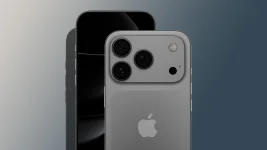
Apple lists the iPhone 17 Pro at 150.0 by 71.9 by 8.75 mm, making it larger in every body dimension than the 16 Pro. A 16 Pro case does not properly fit an iPhone 17 Pro, even though both phones use a 6.3-inch display.
Both iPhone 17 Pro and iPhone 16 Pro use the same 6.3-inch display size, which is where the confusion starts. Both panels are 2622 by 1206 pixels at 460 ppi, and Apple gives both a 6.27-inch diagonal when measured as a standard rectangle, but the glass size tells you very little about the shell around it.
The iPhone 17 Pro and iPhone 16 Pro hardware differs at the rear too. The newer phone uses a broad camera plateau and an aluminum unibody, while the 16 Pro has the older titanium design and a much smaller camera area.
Half a millimeter of extra depth is enough to matter when a rigid case is molded around corners, buttons, camera glass, and the USB-C opening. The 17 Pro is also 0.4 mm wider and 0.4 mm taller than the 16 Pro, so forcing the newer phone into a fitted 16 Pro shell can leave edges unseated or openings misplaced.
The biggest design change between the iPhone 17 Pro and iPhone 16 Pro sits around the cameras. The 17 Pro's part-aluminum, part-glass rear keeps wireless charging while the camera plateau occupies far more of the upper back, so the older square camera cutout simply does not provide the clearance the newer phone needs.
The weight difference between the iPhone 16 Pro and 17 Pro is 7 grams on current U.S. models, moving from 199 grams to 206 grams. Weight alone does not decide case fit, but it is another reminder that the phones are not the same chassis with a new processor inside.
Check the exact protector model rather than assuming every 16 Pro sheet will transfer. Edge geometry, adhesive coverage, speaker clearance, alignment frames, and case-friendly margins can differ by manufacturer, and a full-body film that wraps farther around the phone has tighter physical requirements than a flat piece of front glass.
The aluminum iPhone 17 Pro and titanium iPhone 16 Pro also put different demands on a case. A raised lip around the newer camera area matters because sharp-edged camera plateau chipping has appeared in durability testing, while regular-use camera plateau scratches make a loose or badly aligned old case a poor compromise.
The reverse direction is the real problem. Trying to make an iPhone 17 Pro fit an iPhone 16 Pro case puts the larger, thicker phone against a shell shaped for smaller dimensions and a different camera opening, so even a case that seems to snap on can obstruct hardware or fail to grip the corners correctly.
Side by side, the iPhone 17 Pro and iPhone 16 Pro do not look dramatically different in footprint, but their build-quality and material changes have bigger accessory consequences than the measurements suggest. Reuse MagSafe chargers and other magnetically attached accessories where their makers support the newer phone, but treat fitted cases as generation-specific and verify screen protectors by exact product compatibility rather than display size alone.
Both iPhone 17 Pro and iPhone 16 Pro use the same 6.3-inch display size, which is where the confusion starts. Both panels are 2622 by 1206 pixels at 460 ppi, and Apple gives both a 6.27-inch diagonal when measured as a standard rectangle, but the glass size tells you very little about the shell around it.
The iPhone 17 Pro and iPhone 16 Pro hardware differs at the rear too. The newer phone uses a broad camera plateau and an aluminum unibody, while the 16 Pro has the older titanium design and a much smaller camera area.
The extra half millimeter breaks case fit
The size difference between the iPhone 17 Pro and iPhone 16 Pro is small on paper. Height rises from 149.6 to 150.0 mm, width moves from 71.5 to 71.9 mm, and their thickness differs by half a millimeter at 8.75 mm versus 8.25 mm.Half a millimeter of extra depth is enough to matter when a rigid case is molded around corners, buttons, camera glass, and the USB-C opening. The 17 Pro is also 0.4 mm wider and 0.4 mm taller than the 16 Pro, so forcing the newer phone into a fitted 16 Pro shell can leave edges unseated or openings misplaced.
The biggest design change between the iPhone 17 Pro and iPhone 16 Pro sits around the cameras. The 17 Pro's part-aluminum, part-glass rear keeps wireless charging while the camera plateau occupies far more of the upper back, so the older square camera cutout simply does not provide the clearance the newer phone needs.
The weight difference between the iPhone 16 Pro and 17 Pro is 7 grams on current U.S. models, moving from 199 grams to 206 grams. Weight alone does not decide case fit, but it is another reminder that the phones are not the same chassis with a new processor inside.
Screen protectors are a separate fit question
Screen protector compatibility between the iPhone 17 Pro and iPhone 16 Pro is less clear-cut than case compatibility. The display dimensions and resolution match closely enough that some accessory makers explicitly sell the same tempered-glass protector for both models, so a protector can be cross-compatible even when a full case is not.Check the exact protector model rather than assuming every 16 Pro sheet will transfer. Edge geometry, adhesive coverage, speaker clearance, alignment frames, and case-friendly margins can differ by manufacturer, and a full-body film that wraps farther around the phone has tighter physical requirements than a flat piece of front glass.
The aluminum iPhone 17 Pro and titanium iPhone 16 Pro also put different demands on a case. A raised lip around the newer camera area matters because sharp-edged camera plateau chipping has appeared in durability testing, while regular-use camera plateau scratches make a loose or badly aligned old case a poor compromise.
A 17 Pro case can sometimes fit backward
Case compatibility is not perfectly symmetrical. Some iPhone 17 Pro cases can physically accept the slightly smaller iPhone 16 Pro because the newer case already has extra room and a larger camera opening, but the result can leave more of the 16 Pro's rear exposed than the case designer intended.The reverse direction is the real problem. Trying to make an iPhone 17 Pro fit an iPhone 16 Pro case puts the larger, thicker phone against a shell shaped for smaller dimensions and a different camera opening, so even a case that seems to snap on can obstruct hardware or fail to grip the corners correctly.
Side by side, the iPhone 17 Pro and iPhone 16 Pro do not look dramatically different in footprint, but their build-quality and material changes have bigger accessory consequences than the measurements suggest. Reuse MagSafe chargers and other magnetically attached accessories where their makers support the newer phone, but treat fitted cases as generation-specific and verify screen protectors by exact product compatibility rather than display size alone.