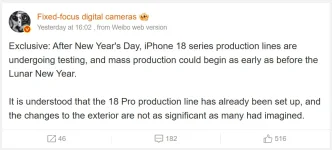
Apple might be kicking off mass production for its 2026 iPhones way earlier than usual, according to online leaks. The rumor, from a source on Weibo, suggests testing for iPhone 18 production lines is imminent, with full-scale manufacturing potentially starting before the Lunar New Year in February. The reported reason for this accelerated timeline is a lack of major external design changes from the upcoming iPhone 17 series, simplifying the process.
The whispers indicate the 2026 flagship models could be the first to feature a fully integrated in-screen Face ID system, eliminating the need for a front-facing camera cutout. While design alterations may be minimal, previous speculation mentioned a possible shift to a slightly transparent back panel and a new color scheme. A significant structural change is also rumored, with Apple possibly launching just three high-end models: an iPhone 18 Pro, an iPhone 18 Pro Max, and a foldable iPhone. The standard base model might arrive later and be rebranded as the iPhone 20.
Not all components would be ready this early, however, as the next-generation A20 chips aren't slated for production until later in 2026. The aggressive timeline could be linked to supply chain negotiations, allowing Apple to secure parts like DRAM chips in bulk at favorable prices before current contracts with suppliers like Samsung and SK hynix expire.
The whispers indicate the 2026 flagship models could be the first to feature a fully integrated in-screen Face ID system, eliminating the need for a front-facing camera cutout. While design alterations may be minimal, previous speculation mentioned a possible shift to a slightly transparent back panel and a new color scheme. A significant structural change is also rumored, with Apple possibly launching just three high-end models: an iPhone 18 Pro, an iPhone 18 Pro Max, and a foldable iPhone. The standard base model might arrive later and be rebranded as the iPhone 20.
Not all components would be ready this early, however, as the next-generation A20 chips aren't slated for production until later in 2026. The aggressive timeline could be linked to supply chain negotiations, allowing Apple to secure parts like DRAM chips in bulk at favorable prices before current contracts with suppliers like Samsung and SK hynix expire.