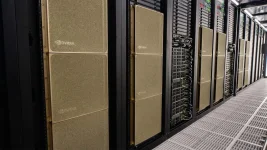
NVIDIA's Blackwell Ultra B300 chips showed up in China Telecom's network data, with 32 GPUs flagged by Lava. The Israeli cybersecurity firm found them through a remote check. Their real-world location, though, stayed unclear.
A basic server health tool made that check possible. NVIDIA's Data Center GPU Manager (DCGM) Exporter was open to the web without a login. Data center staff use it to track how gear runs, but this setup let people outside the system see chip details.
ByteDance, Alibaba, and Tencent have had to use RTX PRO 5500 chips to run AI inference due to U.S. trade curbs. The B300 has 288GB in HBM3E memory across eight stacks of 12 layers. Its bus is 8,192 bits wide, with 8TB/s of data flow.
Against older chips, memory capacity and FP4 processing can be as much as 50% higher. That can help with hard AI tasks, such as large models built for reasoning. And yes, this is part of why access to these GPUs faces strict limits.
Under U.S. policy, only approved clients may buy these GPUs, and they must stop further sales to banned groups. The China Telecom finding raises concerns about smuggling. But a remote scan does not prove how the gear became linked to this network.
NVIDIA, though, is not treating this as a major issue. It says illicitly moved U.S. chips account for under 0.5% of deployed stock, a small share next to hardware already in China. The 32 detections raise a fair question about other state-run operators, but this case confirms nothing about them.