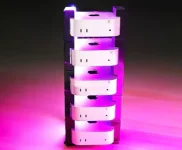
Facing energy scarcity and rising memory costs, AI server farms in 2026 could find a potential solution in Apple's upcoming M5 Pro Mac mini. According to developer Alex Ziskind, running simpler machine learning tasks on Apple silicon is already more cost-effective than using high-end NVIDIA GPUs like the RTX 4090.
The M5 Pro Mac mini, anticipated for release around mid-2026, is expected to feature a 24-core GPU with dedicated neural accelerators and a larger unified memory cache. This architecture provides a significant advantage, as its unified memory allows the CPU and GPU to share a single pool, contrasting with the separate memory found in discrete GPUs.
Further enhancing its potential for data centers, a new low-latency Thunderbolt 5 feature in macOS can cluster multiple Macs. This setup creates a high-performance system capable of handling demanding AI workloads while circumventing the industry's challenges with expensive DRAM.
The M5 Pro Mac mini, anticipated for release around mid-2026, is expected to feature a 24-core GPU with dedicated neural accelerators and a larger unified memory cache. This architecture provides a significant advantage, as its unified memory allows the CPU and GPU to share a single pool, contrasting with the separate memory found in discrete GPUs.
Further enhancing its potential for data centers, a new low-latency Thunderbolt 5 feature in macOS can cluster multiple Macs. This setup creates a high-performance system capable of handling demanding AI workloads while circumventing the industry's challenges with expensive DRAM.