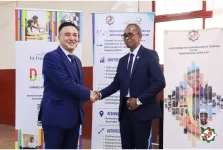
Madagascar just slammed the start button on DCLIC, turning a small training cohort into a test run for nationwide digital skills growth.
Training launch and key players
Training launch and key players
- January 19, 2026, shows up as the day the DCLIC project really kicks off under the Ministry of Technical Education and Vocational Training.
- Instead of some quiet ribbon cutting, Minister TSILEFA Antonio turns up alongside Mr. Traian Laurenciu Hristea from the International Organization of Francophonia OIF.
- The project sponsor role lands with the International Organization of Francophone OIF, which backs the whole DCLIC setup from the start.
- This first phase pulls in 30 trainees for a 30-day stretch, treated as the starter wave rather than the full story.
- Training time splits into three neat blocks, with 10 days in person, 10 days at a distance, then another 10 days back on site.
- Trainees juggle theory with gear in their hands, since the project actually provides the equipment they are using for practice.
- The whole setup chases one goal: getting young people ready for real jobs in the growing digital sector, not only more classroom theory.
- Across the full DCLIC rollout, 1,000 young people are expected to cycle through training in Antananarivo, Antsirabe, Toamasina, and Toliara.
- Youth from those four regions see themselves folded into the same initiative, even though this first phase only covers a small slice of that total.
- Madagascar uses the DCLIC project as a clear signal that digital skills and youth employability are treated as core priorities.
- Vocational training in the country gets nudged closer to modern industry needs, since the project explicitly tries to answer evolving job market demands.
- The initiative plugs into broader efforts to update how technical education works in Madagascar, instead of treating digital training as a one-off special case.