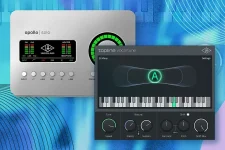
Topline Vocal Tune lets its Speed control range from 0 to 400 milliseconds, while separate Natural controls decide how much pitch movement survives. The useful part is not simply turning everything toward “natural.” Better results come from deciding which parts of the performance need correction and which movements belong to the singer.
Start with Speed before touching anything else. Faster settings pull detected pitch toward the target note more aggressively, while slower settings let the original movement settle more gradually. If the vocal already sits close to pitch, a slower setting often leaves enough life in the attack and release without much help from the Natural section.
A fast Speed setting changes the job. It can tighten a shaky phrase quickly, but it also exposes every place where the singer bends into a note, drops away from one, or adds vibrato late. Natural controls matter here because each one protects a different kind of movement.
Use Expressive when the singer is landing on the right notes but sounds less convincing once tuning is engaged. Gentle vibrato, small emotional fluctuations, and tiny pitch drifts often live close to the note center, so flattening them can make a solid performance feel strangely fixed. A wider Expressive range leaves more of those movements alone while still catching larger misses.
Watch the tuning display while you adjust it. Topline shows the active Expressive or Elastic range in blue, which makes the setting easier to judge than turning a knob and hoping the vocal improves. Listen first, then use the display to confirm what the control is allowing rather than treating the graphic as a target.
Pitch correction research points in the same direction. A 2020 ICASSP paper on preserving intentional pitch variation trained a correction system to distinguish genuine intonation errors from deliberate pitch movement instead of treating every deviation as a mistake. Topline uses its own system, but the practical lesson is useful here. Natural tuning needs room for intentional movement.
Push Elastic when the singer deliberately approaches notes from above or below. A quick scoop can sound clumsy if the middle of the movement gets pulled toward a neighboring allowed pitch. Leaving more of the excursion untouched keeps the phrase intact while correction still works where the voice settles.
More Elastic is not automatically more natural. A genuinely flat entrance can resemble an intentional scoop, especially on loose R&B or rap-sung phrases, so a permissive setting can preserve mistakes you wanted fixed. Loop the problem phrase and raise Elastic only until the intended gesture stops fighting the tuner.
Key and scale setup matters here too. Topline corrects detected pitch toward permitted notes, so the wrong scale can make a natural setting feel broken even when Expressive and Elastic are behaving properly. Fix the target notes before softening the correction.
A long note usually contains more internal movement than a clipped syllable. Vibrato may arrive after the pitch center is established, and the note can relax slightly as breath pressure changes. Heavy correction across the full duration can make the beginning sound clean while the back half turns stiff.
Set Speed for the short material first, then raise Sustain until the held notes stop feeling pinned. If a long note still wanders too far, reduce Sustain rather than slowing the whole plugin and losing control over faster phrases. This split is one of the less obvious ways to get Topline Vocal Tune on Apollo DSP working naturally during tracking without changing the correction style for every word.
One failure mode is easy to miss. Topline is designed to detect and correct an individual solo vocal, not a stacked group track, so several voices feeding one instance can undermine pitch detection before Natural settings get a chance to help. Separate the voices first, tune the part that needs correction, and leave already convincing movement alone.
Start with Speed before touching anything else. Faster settings pull detected pitch toward the target note more aggressively, while slower settings let the original movement settle more gradually. If the vocal already sits close to pitch, a slower setting often leaves enough life in the attack and release without much help from the Natural section.
A fast Speed setting changes the job. It can tighten a shaky phrase quickly, but it also exposes every place where the singer bends into a note, drops away from one, or adds vibrato late. Natural controls matter here because each one protects a different kind of movement.
Expressive protects small movement around the note
Expressive sets a tolerance around the pitch center where small deviations can pass without correction. At its lowest setting, almost every deviation gets pulled toward the target. Raise it, and the tuner allows more movement near the intended note before stepping in.Use Expressive when the singer is landing on the right notes but sounds less convincing once tuning is engaged. Gentle vibrato, small emotional fluctuations, and tiny pitch drifts often live close to the note center, so flattening them can make a solid performance feel strangely fixed. A wider Expressive range leaves more of those movements alone while still catching larger misses.
Watch the tuning display while you adjust it. Topline shows the active Expressive or Elastic range in blue, which makes the setting easier to judge than turning a knob and hoping the vocal improves. Listen first, then use the display to confirm what the control is allowing rather than treating the graphic as a target.
Pitch correction research points in the same direction. A 2020 ICASSP paper on preserving intentional pitch variation trained a correction system to distinguish genuine intonation errors from deliberate pitch movement instead of treating every deviation as a mistake. Topline uses its own system, but the practical lesson is useful here. Natural tuning needs room for intentional movement.
Elastic leaves larger vocal gestures intact
Elastic behaves differently from Expressive. Instead of mainly protecting little movements around pitch center, it can let larger excursions escape correction, which matters for scoops, slides, and portamento. Those gestures often travel far enough from the target note that a conventional correction setting tries to drag the motion into place.Push Elastic when the singer deliberately approaches notes from above or below. A quick scoop can sound clumsy if the middle of the movement gets pulled toward a neighboring allowed pitch. Leaving more of the excursion untouched keeps the phrase intact while correction still works where the voice settles.
More Elastic is not automatically more natural. A genuinely flat entrance can resemble an intentional scoop, especially on loose R&B or rap-sung phrases, so a permissive setting can preserve mistakes you wanted fixed. Loop the problem phrase and raise Elastic only until the intended gesture stops fighting the tuner.
Key and scale setup matters here too. Topline corrects detected pitch toward permitted notes, so the wrong scale can make a natural setting feel broken even when Expressive and Elastic are behaving properly. Fix the target notes before softening the correction.
Sustain keeps held notes from locking too fast
Sustain changes the behavior of longer notes rather than treating short and held notes identically. Raise it and sustained pitches are corrected more slowly relative to the main Speed setting, while shorter notes continue to follow Speed more closely. The distinction helps on choruses where quick words need control, but the singer stretches the final vowel.A long note usually contains more internal movement than a clipped syllable. Vibrato may arrive after the pitch center is established, and the note can relax slightly as breath pressure changes. Heavy correction across the full duration can make the beginning sound clean while the back half turns stiff.
Set Speed for the short material first, then raise Sustain until the held notes stop feeling pinned. If a long note still wanders too far, reduce Sustain rather than slowing the whole plugin and losing control over faster phrases. This split is one of the less obvious ways to get Topline Vocal Tune on Apollo DSP working naturally during tracking without changing the correction style for every word.
One failure mode is easy to miss. Topline is designed to detect and correct an individual solo vocal, not a stacked group track, so several voices feeding one instance can undermine pitch detection before Natural settings get a chance to help. Separate the voices first, tune the part that needs correction, and leave already convincing movement alone.