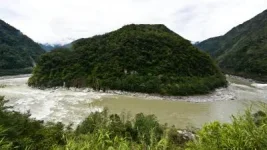
China constructs the massive Medog Hydropower Station along Tibet's Yarlung Tsangpo River, threatening centuries of Tibetan cultural heritage. Harvard researcher Jianli Yang warns this project mirrors the devastating Three Gorges Dam experience that displaced over 1.3 million people and destroyed historical sites. The Yarlung Tsangpo holds deep spiritual significance for Tibetans, flowing from sacred Mount Kailash through revered landscapes. The Great Bend area represents Pemako, a prophetic sanctuary that believers consider humanity's refuge during apocalyptic times. Yang argues that flooding this region would destroy irreplaceable temples, pilgrimage paths, and meditation sites that form the backbone of Tibetan identity.
The project proceeds under unusual secrecy compared to previous Chinese infrastructure developments. China's Tibet development policies have historically prioritized assimilation through urbanization and resource extraction. Yang suggests China faces a critical decision between repeating past displacement patterns or respecting Tibet as a living civilization worthy of protection. The outcome will determine whether Tibetan communities retain their ancestral connections or face cultural extinction through forced relocation.
The project proceeds under unusual secrecy compared to previous Chinese infrastructure developments. China's Tibet development policies have historically prioritized assimilation through urbanization and resource extraction. Yang suggests China faces a critical decision between repeating past displacement patterns or respecting Tibet as a living civilization worthy of protection. The outcome will determine whether Tibetan communities retain their ancestral connections or face cultural extinction through forced relocation.