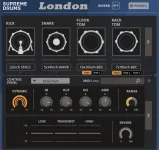
Sound Magic says Supreme Drums London was captured with multiple microphone perspectives and can feed stereo, 5.1, 9.1, and 11.1 systems. More channels sound like an automatic scale, yet opening every fader can make a drum mix softer, blurrier, and harder to place.
Each microphone hears a different version of the same strike. Close mics emphasize attack and individual shells, overheads reveal the kit as a connected instrument, while room and surround positions add distance, reflections, width, and decay. Mixing them is less about collecting everything than deciding where the listener should sit.
The Supreme Drums London multi-mic recording setup matters because changing perspective changes more than width. A room channel contains later arrivals from the space, and those reflections alter perceived distance, decay, and tone before you add any algorithmic reverb.
Overheads are not simply cymbal microphones either. In a well-balanced capture, they can hold the snare, toms, cymbals, and part of the kick in one acoustic picture. Turning them down while pushing every close channel can make a sampled kit feel assembled piece by piece rather than played in a room.
Room microphones work differently again. Near ambience can add size without moving the kit very far back, while distant positions usually bring more room decay and a softer direct attack. A huge far-room fader may sound thrilling in solo and then steal clarity once guitars, bass, vocals, and reverbs arrive.
Do not reach for automatic alignment every time. Natural delay between close and distant microphones is part of the depth cue you paid for, and forcing every transient onto the same sample can pull the room toward the kit. Flip polarity where appropriate, adjust levels first, and move timing only when the combination genuinely loses useful body or focus.
Mono checking is especially revealing. A wide room pair may sound impressive across headphones while cancellations become obvious when left and right collapse together. If the snare loses weight or cymbals turn hollow in mono, reduce or rebalance the offending perspective before adding more processing.
Spatial research gives another reason to treat ambience as structure rather than decoration. Listener-envelopment measurements from multichannel room captures found important envelopment information in relatively early portions of room impulse responses, not only in the long late tail. Perceived space therefore depends on when reflected energy arrives and where it arrives from, not just how long the reverb lasts.
Fold those channels into stereo deliberately rather than treating them as bonus loudness. A rear or height perspective can add depth, diffusion, and a different room angle, but too much can widen the decay until the kit stops feeling anchored between the speakers.
Rock usually needs a center of gravity. Kick and snare can stay firm near the middle while overhead and room information creates width around them. If the ambience becomes wider and louder than the direct kit, the drummer can appear to move behind the guitars even though none of the individual channels sound obviously wrong.
Immersive formats make the same decisions more exposed. Extra speakers give room energy somewhere physical to go instead of folding everything into left and right, but they also reveal whether the capture has a coherent front, rear, and height relationship. Sending every ambience channel everywhere wastes the geometry already recorded into the library.
For a stereo production, begin with the smallest microphone combination that gives the kit the depth you need. Add another perspective only when you can name its job, whether that is more shell attack, a wider kit image, shorter room body, or distant decay. Extra microphones earn their place by solving one of those problems, not by existing.
Each microphone hears a different version of the same strike. Close mics emphasize attack and individual shells, overheads reveal the kit as a connected instrument, while room and surround positions add distance, reflections, width, and decay. Mixing them is less about collecting everything than deciding where the listener should sit.
Mic perspectives define the room before mixing
Start with one perspective that can carry the performance. For a tight rock mix, that may be close mics plus overheads. For a bigger track, an overhead or room pair can become the main picture while the close channels supply definition underneath.The Supreme Drums London multi-mic recording setup matters because changing perspective changes more than width. A room channel contains later arrivals from the space, and those reflections alter perceived distance, decay, and tone before you add any algorithmic reverb.
Overheads are not simply cymbal microphones either. In a well-balanced capture, they can hold the snare, toms, cymbals, and part of the kick in one acoustic picture. Turning them down while pushing every close channel can make a sampled kit feel assembled piece by piece rather than played in a room.
Room microphones work differently again. Near ambience can add size without moving the kit very far back, while distant positions usually bring more room decay and a softer direct attack. A huge far-room fader may sound thrilling in solo and then steal clarity once guitars, bass, vocals, and reverbs arrive.
More ambience can create phase and depth problems
Multiple microphones record the same transient at slightly different times because each capsule sits at a different distance from the drum. When those signals are combined, their timing and polarity relationships can reinforce some frequencies and weaken others. The result can be a snare that gets thinner when another mic is added instead of larger.Do not reach for automatic alignment every time. Natural delay between close and distant microphones is part of the depth cue you paid for, and forcing every transient onto the same sample can pull the room toward the kit. Flip polarity where appropriate, adjust levels first, and move timing only when the combination genuinely loses useful body or focus.
Mono checking is especially revealing. A wide room pair may sound impressive across headphones while cancellations become obvious when left and right collapse together. If the snare loses weight or cymbals turn hollow in mono, reduce or rebalance the offending perspective before adding more processing.
Spatial research gives another reason to treat ambience as structure rather than decoration. Listener-envelopment measurements from multichannel room captures found important envelopment information in relatively early portions of room impulse responses, not only in the long late tail. Perceived space therefore depends on when reflected energy arrives and where it arrives from, not just how long the reverb lasts.
Surround microphones still matter in a stereo mix
An immersive drum library does not require an immersive release. Toontrack explicitly allows the surround channels in Superior Drummer 3 to be used as extra ambience microphones in ordinary stereo playback, which is a useful model for any library offering several spatial perspectives.Fold those channels into stereo deliberately rather than treating them as bonus loudness. A rear or height perspective can add depth, diffusion, and a different room angle, but too much can widen the decay until the kit stops feeling anchored between the speakers.
Rock usually needs a center of gravity. Kick and snare can stay firm near the middle while overhead and room information creates width around them. If the ambience becomes wider and louder than the direct kit, the drummer can appear to move behind the guitars even though none of the individual channels sound obviously wrong.
Immersive formats make the same decisions more exposed. Extra speakers give room energy somewhere physical to go instead of folding everything into left and right, but they also reveal whether the capture has a coherent front, rear, and height relationship. Sending every ambience channel everywhere wastes the geometry already recorded into the library.
For a stereo production, begin with the smallest microphone combination that gives the kit the depth you need. Add another perspective only when you can name its job, whether that is more shell attack, a wider kit image, shorter room body, or distant decay. Extra microphones earn their place by solving one of those problems, not by existing.