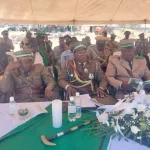
Ovambanderu leader Tjozohongo II Nguvauva marked the centenary of colonial authorities' expulsion of his people from productive farmland to the arid Aminuis region, describing the anniversary as bittersweet. The chief told attendees at Ondjiripumua village on Saturday that families walked across dangerous terrain with livestock and children after German forces removed them from areas near Windhoek, Omitara and Luderitz.
Nguvauva said oppressors attempted to eliminate the Ovambanderu following the 1896 killing of his ancestor, Chief Kahimemua Nguvauva. Colonial administrators forced relatives to adopt different surnames to erase family ties after Kahimemua refused to grant land to German settlers.
The traditional leader celebrated his community's survival and contributions to independence despite persecution under German and South African rule. He asked officials to rename the Gobabis-Aminuis highway after Hiangonda Nguvauva, who guided the migration.
Nguvauva said oppressors attempted to eliminate the Ovambanderu following the 1896 killing of his ancestor, Chief Kahimemua Nguvauva. Colonial administrators forced relatives to adopt different surnames to erase family ties after Kahimemua refused to grant land to German settlers.
The traditional leader celebrated his community's survival and contributions to independence despite persecution under German and South African rule. He asked officials to rename the Gobabis-Aminuis highway after Hiangonda Nguvauva, who guided the migration.